Geraldine Lee
Published: Apr 10, 2026 | Updated: May 07, 2026


Most scenic railways have already done the hard part — sold the ticket. The guest is coming. But the ticket price is only one piece of the revenue picture.
The real question is how much each passenger represents beyond that first sale, and how much of that potential is quietly slipping away on every departure.
Revenue per passenger is one of the most useful numbers in the scenic railway business, and one of the least tracked. It's not just about ticket sales.
It's about the dining upgrade that never got offered, the premium seat that sold at standard price, the group charter that took three weeks of emails to close, and the foliage-season departure that ran at the same rate as a Tuesday in March.
This guide covers seven practical ways scenic railway operators can increase revenue per passenger — without adding departures, increasing marketing spend, or raising base ticket prices.
Evaluating whether your current system can support these strategies? Start here: How to Choose Ticketing Software for Your Scenic Railway
It's total earned revenue divided by total passengers over a given period. Not just ticket revenue — everything. Dining, upgrades, photo packages, group bookings, merchandise, memberships, gift shop. All of it, divided by the number of people who boarded.

Most operators track occupancy and ticket count. Both are useful, but they only tell you about volume. Revenue per passenger tells you about yield — how much value you're extracting from each guest who's already on the train.
Because capacity is fixed. A scenic railway has a set number of seats per departure, a set number of departures per day, and a set number of operating days per season. Once you're running at strong occupancy, the only way to grow revenue meaningfully is to increase what each passenger is worth.
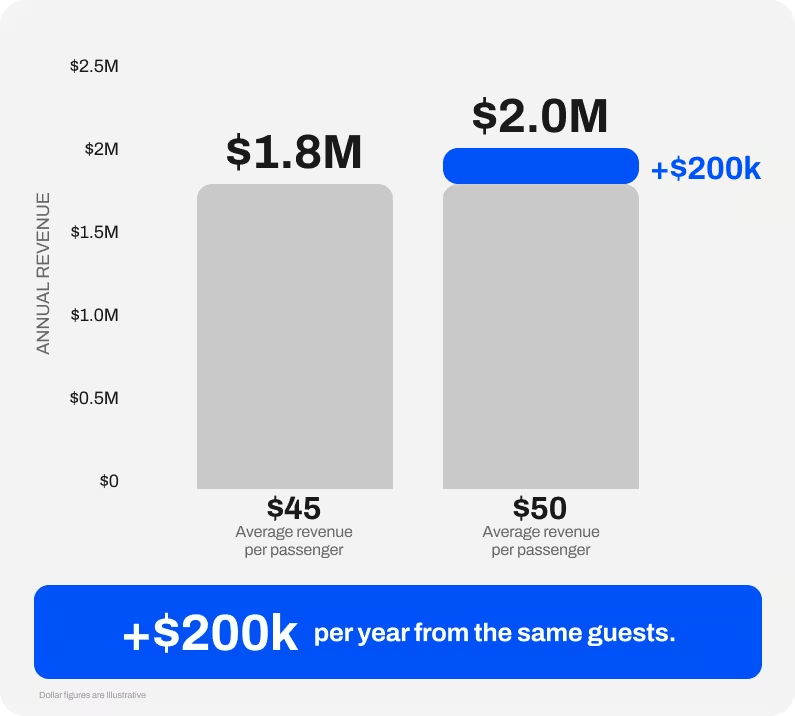
Here's a simple illustration: an operator running 40,000 passengers per year who increases revenue per passenger by $5 generates an additional $200,000 annually. No new departures. No new marketing spend. Same guests, more revenue.
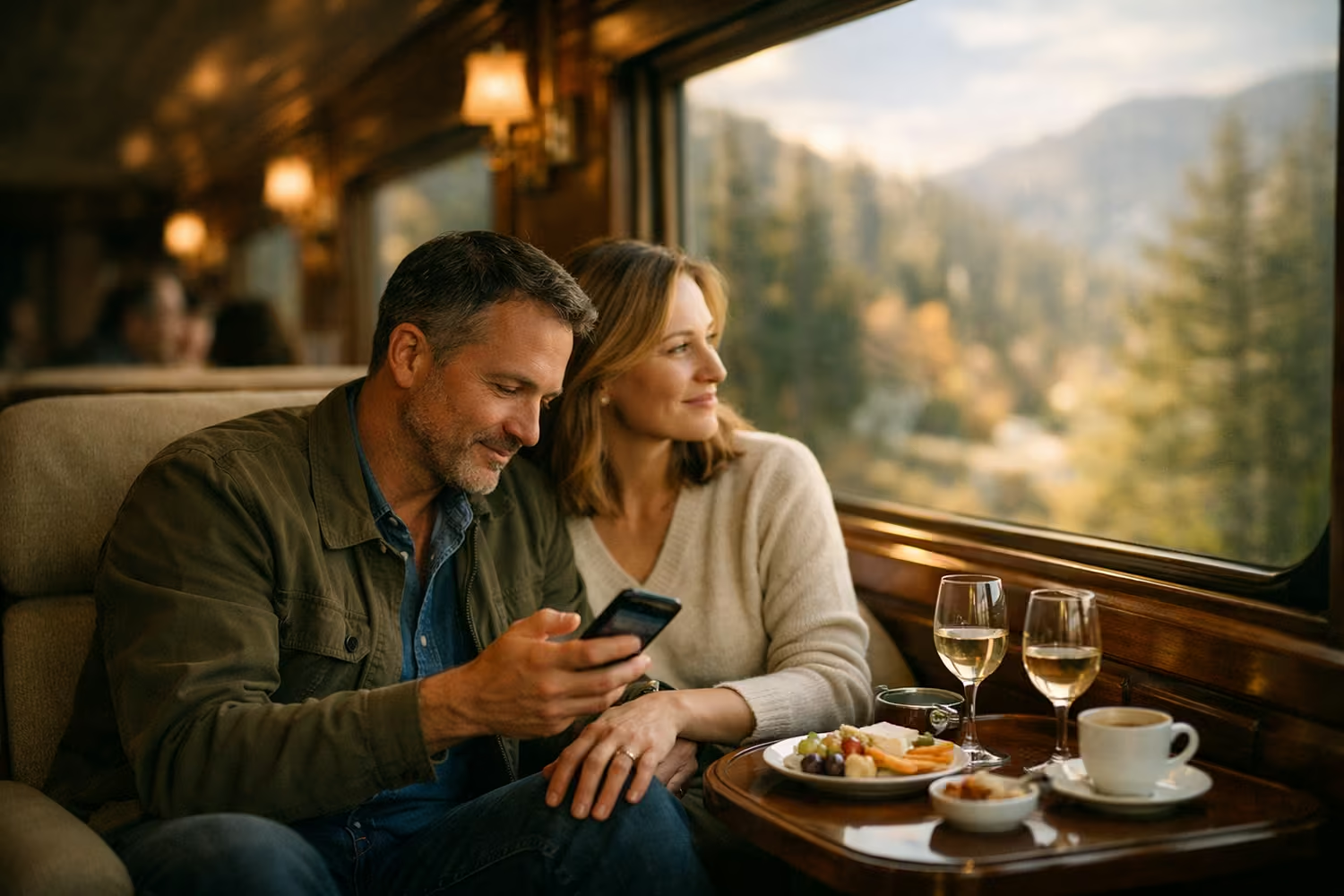
At booking. Not at the platform. Not by email three days before. At the exact moment when the guest has their card out, they're excited about the trip, and they're making decisions.
This isn't just intuition — it's how the most sophisticated operators in the world think about guest spending. Disney has an internal concept called the "Disney Wallet": their estimate of how much a guest will spend in-park on a given day. The insight that drives their pricing strategy is that pre-arrival spending doesn't reduce in-park spending. Guests mentally separate "what I bought when I booked" from "what I'm spending today." They're different budgets in the guest's mind.
The same principle applies to scenic railways. A guest who adds a $28 dining upgrade at checkout doesn't spend $28 less at the gift shop. Pre-trip purchases feel like planning — they're part of the anticipation. On-site purchases feel like spending. They don't compete with each other.
(The "Disney Wallet" concept is well-documented in theme park operations literature. For a good overview, see Trung Phan's analysis in The Disneyland Dilemma.)
Anything the guest can say yes to while they're already buying. The most effective checkout add-ons for scenic railways are:
The critical detail: these need to appear inside the ticket checkout flow, not as a separate purchase on a different page or at a different desk. When upsells are part of the checkout, the guest sees them at the highest-intent moment. When they're sold separately, most guests never encounter them at all.
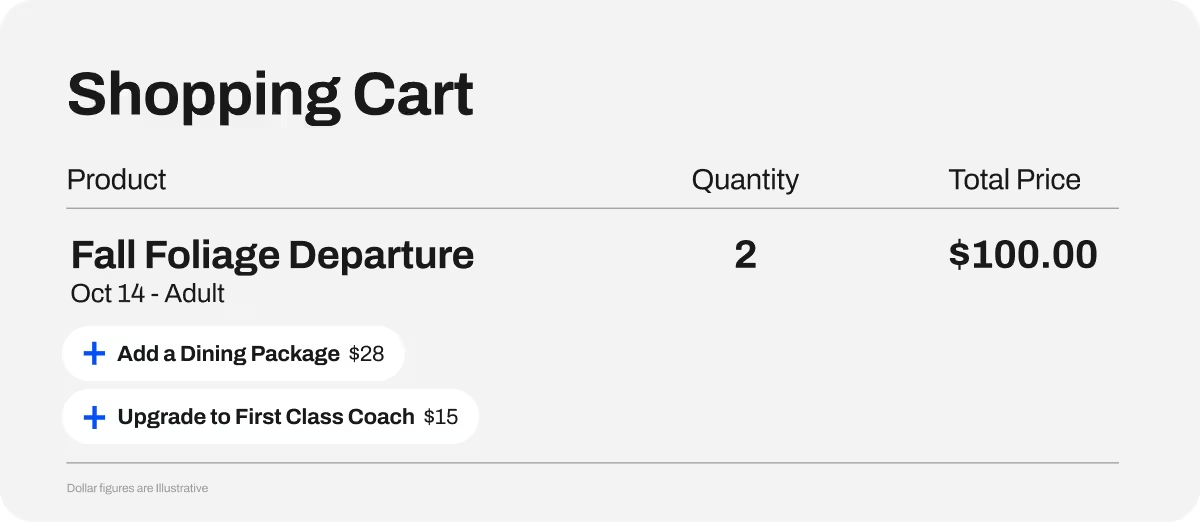
Yes — and this is where most operators leave the most recoverable revenue on the table.
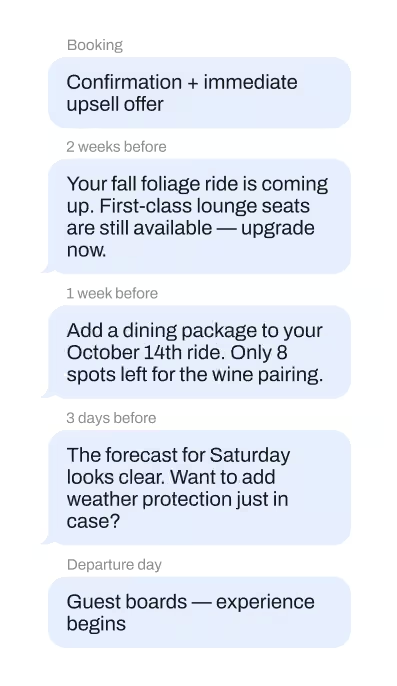
The period between booking and departure is typically weeks or months for scenic railways. Guests book a fall foliage ride in July. They buy holiday train tickets in September. During that window, most operators send a confirmation email with logistics — departure time, parking directions, what to bring — and nothing else.
That confirmation email is a logistics document. It does its job. But every communication between booking and departure is also a revenue opportunity: a chance to offer what the guest wasn't ready to buy at checkout but might want now that the trip feels real.
It's departure-specific, timely, and tied to what the guest actually booked. Not a generic newsletter. Examples:
The key is that these messages reference the specific departure, the specific seat class, and the actual availability. Automated guest communication tools that tie directly to the reservation system make this possible at scale — without a staff member drafting individual emails.
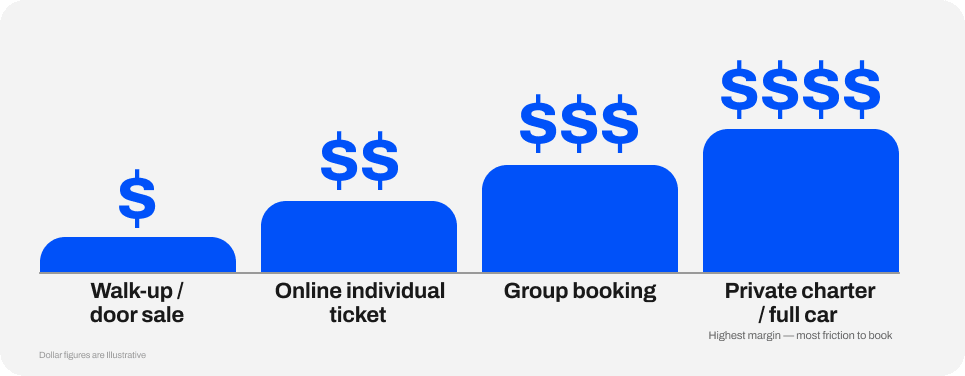
For scenic railways with defined demand peaks, it does both — and that's the point.
Fall foliage. Holiday trains. Easter specials. Summer weekends. These windows have built-in demand that most operators already know about. The question is whether pricing reflects that demand or whether every departure runs at the same flat rate regardless of when it is.
It means a fall foliage departure on peak weekend in October costs more than the same route on a Tuesday in March. It means holiday train pricing reflects the fact that those departures sell out weeks in advance. And it means shoulder-season departures can be priced to stimulate demand — a promotional rate on a quiet Wednesday that gets seats filled rather than running half-empty.
The practical requirement: scheduled rate rules that activate and deactivate automatically. Foliage pricing goes live on October 1st. Holiday rates apply from November 15th through December 23rd. Promotional pricing runs for a defined window and reverts without anyone logging in to change it. When pricing requires manual updates, it introduces errors and it means someone has to remember — which works until the morning it doesn't.
It depends on demand concentration, but the math is straightforward. An operator with 10 high-demand weekends per year, running 4 departures per weekend at 200 passengers each, who prices those 8,000 seats $8 above shoulder-season rate captures $64,000 more per year — from demand that already existed.
Because the economics are structurally different. A private car charter with a custom rate, deposit structure, catering package, and dedicated staff generates significantly more revenue per head than the same seats sold individually at the standard price. Corporate events, wedding trains, school field trips, tour operator packages — these are premium products with premium pricing, sold to buyers who expect to pay for the experience.
Because the operational friction is high. A typical group booking workflow involves an email inquiry, a back-and-forth on availability and pricing, a custom quote, a deposit, a follow-up on the balance, a manifest, and coordination with operations and F&B. In most booking platforms, none of that is native. It lives in an inbox and a spreadsheet.
When the workflow is painful, it doesn't get prioritised. Inquiries sit for days. Follow-ups slip. The staff member who "owns" group bookings becomes a single point of failure. And the highest-margin revenue channel gets treated like a side project.
Event management tools that handle group booking logic natively — quotes, deposits, seat holds, invoicing, manifests — turn this from an operational burden into a scalable revenue channel.
A single-ride guest generates revenue once. A member who rides three times per year at a discounted rate generates more total revenue — and at a fraction of the acquisition cost.
This is the lifetime value argument. A family that buys a seasonal pass for a scenic railway, rides the fall foliage train, comes back for the holiday train, and returns for a spring event represents three separate revenue events — each with its own add-on potential — from a single acquisition. The per-ride revenue may be lower than a full-price one-time ticket, but the total value is multiples higher.
It applies wherever there's a local or regional repeat market. Scenic railways with holiday trains, seasonal events, and regular themed departures have a built-in reason for guests to come back. The question is whether there's a structured way for them to commit to doing so.
Membership and pass programs work best when they're tied to the booking system — so pass usage, renewal rates, and member purchase behaviour are visible in the same place as individual ticket revenue. Without that connection, memberships become an island: sold through one system, redeemed through another, and reported on through neither.
You need a unified view of all revenue streams — ticket sales, add-ons, group bookings, dining, merchandise, memberships — divided by passenger count. If your ticketing system, POS, and group bookings live in three different tools, producing this number is a manual project. You export from each, reconcile in a spreadsheet, and by the time the answer is ready, the weekend is over.
These are the questions that drive revenue-per-passenger improvement:
If answering any of those requires an export and a spreadsheet, you have historical data — not actionable intelligence. Real-time reporting dashboards that pull all revenue streams into a single view let operators adjust pricing, programming, and communication while there's still time to affect the outcome. For deeper analysis, Power BI integration keeps data current and available to anyone in the organisation.
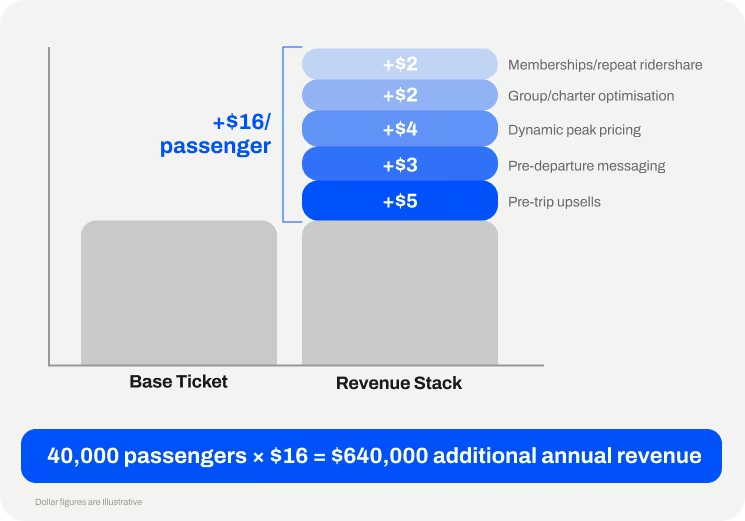
Revenue per passenger isn't a single lever. It's a stack — and the operators consistently growing this number are pulling more than one at a time.
Each row in this table is incremental on its own. A $5 improvement in checkout upsells plus a $3 improvement from pre-departure messaging plus $8 from better peak pricing adds up to $16 more per passenger. At 40,000 passengers, that's $640,000 per year.
Not every operator can pull all six levers at once, and that's fine. The highest-impact starting points for most scenic railways are:
If you're not offering add-ons at checkout today, start there. Moving dining and premium seating into the booking flow is the single fastest way to increase revenue per passenger. The demand already exists — you're just moving the offer to where the guest can actually see it.
If you're running flat pricing across all seasons, implement scheduled rate rules for your top 3–5 demand windows. The revenue is already sitting in your ticket sales data — it's the gap between what you charged and what those seats were worth.
If group bookings are managed in a spreadsheet, that's the friction holding back your highest-margin channel. Fixing the workflow unlocks the revenue.
The operators growing revenue per passenger fastest aren't doing anything exotic. They're capturing value that was always there — from guests who were already coming, already excited, and already willing to spend.
Already wondering if your current system is the bottleneck? Read: 7 Signs Your Scenic Railway Has Outgrown Its Ticketing System
Evaluating platforms? Here's what to look for: How to Choose Ticketing Software for Your Scenic Railway