Geraldine Lee
Published: Mar 27, 2026 | Updated: Apr 10, 2026


Choosing ticketing software for a scenic railway isn't the same as choosing it for a general attraction.
The features that matter most for heritage railways — assigned seating, departure management, charter bookings, onboard revenue capture — are often missing or bolted on as afterthoughts in platforms built for other verticals.
Most ticketing platforms were designed for concerts, experiences, or general admissions. Scenic railways have adapted them, built workarounds, and made them function well enough. But "well enough" has a cost — in staff hours, missed revenue, and operational friction that compounds every season.
This guide covers what to actually look for when evaluating ticketing software for a scenic railway, and the specific questions to ask any vendor before you commit.
Already wondering if your current system is the problem? Start here: 7 Signs Your Scenic Railway Has Outgrown Its Ticketing System
Four things set scenic railways apart from general attractions, and they drive every capability that matters in this evaluation:
A platform that can't handle all four natively will require workarounds. This guide helps you identify which platforms actually can.
They should be able to. Look for a platform with a custom seatmap builder that lets you configure coach-by-coach layouts to match your actual rolling stock. Guests should be able to see available seats, select their preferred position, and have accessible seating managed at the point of purchase — not handled as a separate phone call.
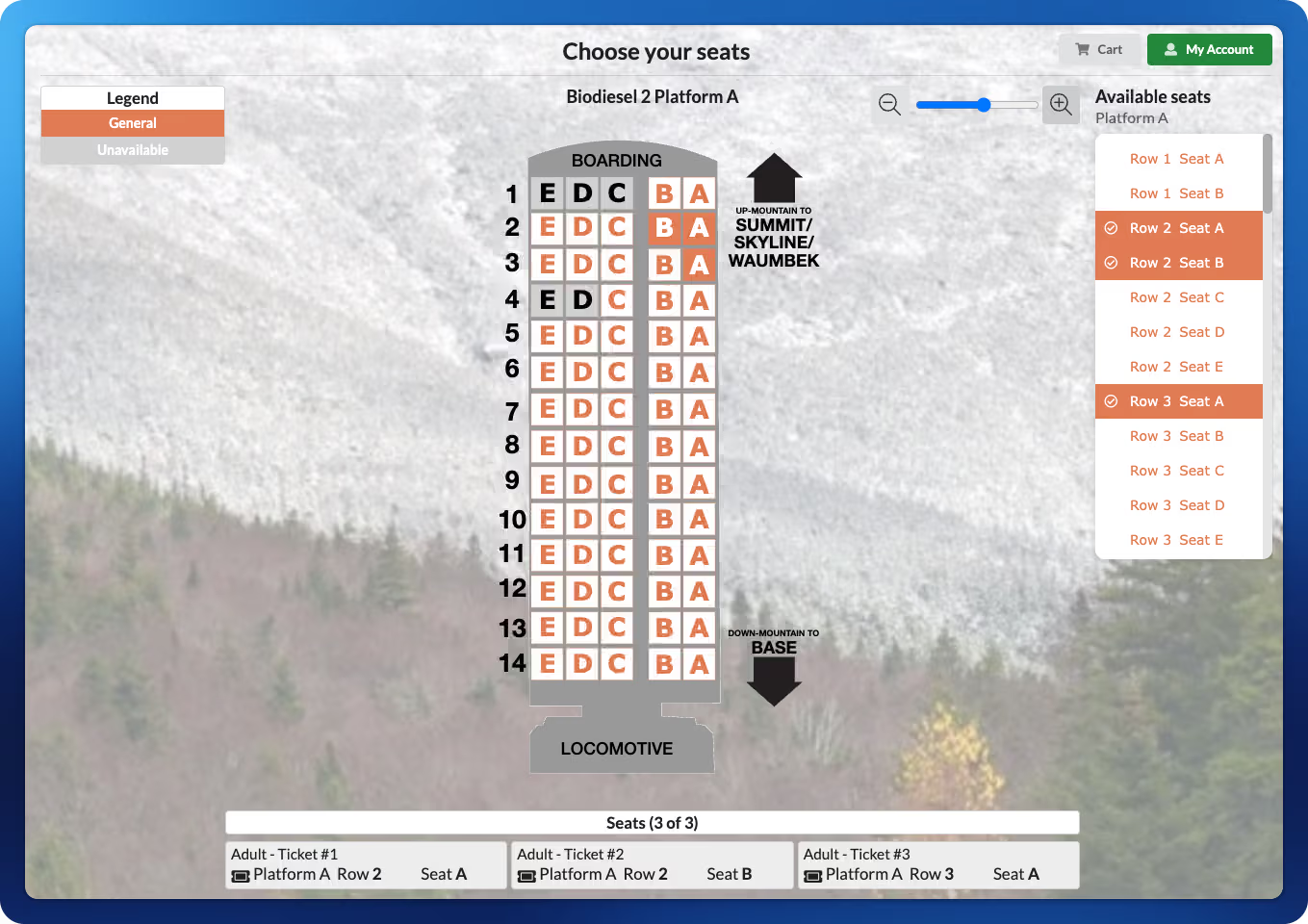
Platforms that show only flat capacity ("8 seats remaining") put the burden of seat management on your staff and create confusion at boarding.
It should. Each departure is its own inventory event — with its own capacity, cutoff time, and potentially its own price. A system that manages inventory per day rather than per departure will cause overbooking and make peak-time pricing impossible to manage cleanly.
The booking flow needs to be mobile-optimised (most guests are booking on phones), load quickly, and surface add-ons — dining upgrades, photo packages, premium seating — at the point of ticket purchase.
A customisable checkout also lets you capture special requests, accessibility needs, and dietary information at the same time, rather than chasing it down separately.
This is one of the sharpest dividers between platforms built for scenic railways and those adapted to them. Group and charter bookings require:
If any of those require a manual export or a separate system, you're not evaluating a platform built for this business. Look for event management tools that handle the full group booking lifecycle inside the same system your front-line staff uses for individual reservations.
It should — and you should ask specifically which ones. RocketRez connects natively to Rezdy, GetYourGuide, Viator, Google Things to Do, CityPASS, and Travel Curious. These are the distribution channels that put your departures in front of guests who wouldn't find you directly.
An OTA connection that requires manual inventory management defeats the purpose. Look for real-time, two-way sync.
The highest-converting moment for a dining upgrade or photo package is during ticket purchase — not at the platform. A platform with integrated upsells at checkout captures revenue that a disconnected system leaves on the table on every single departure.
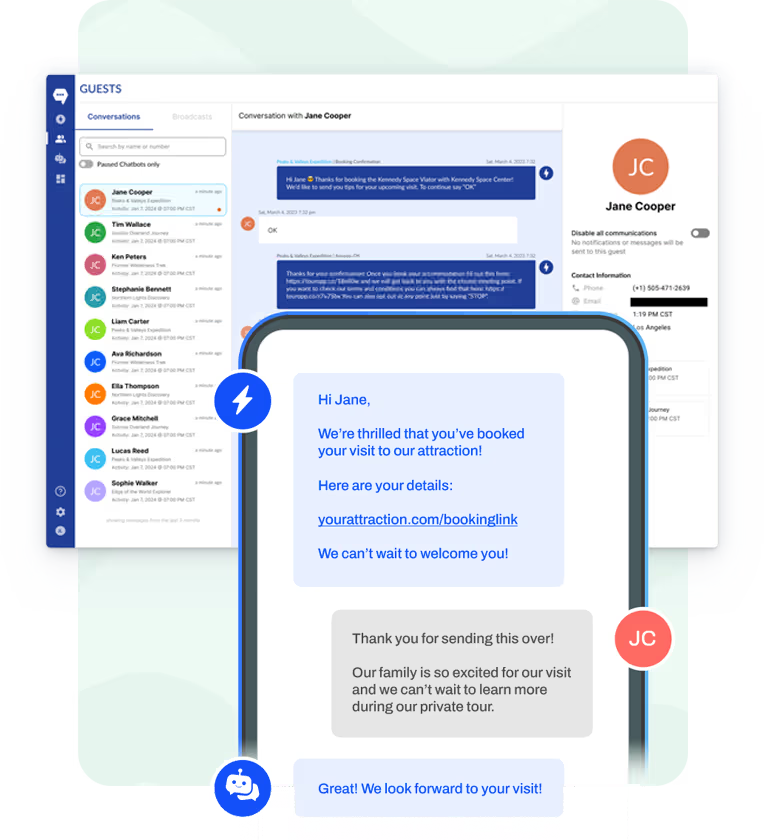
This question separates functional platforms from ones built for the operational realities of outdoor heritage railways. A weather cancellation or mechanical delay should trigger:
If the answer involves a manual export and individual emails, that's hours of staff time on a day that's already difficult. Relay — RocketRez's automated guest communication tool — handles departure-level notifications so guests are informed before they call.
It should, or it should integrate with a tool that does. The Sensible Weather integration lets guests opt into weather protection at checkout — automatic compensation if conditions deteriorate, no paperwork required. For scenic railways, this serves two purposes: it reduces booking hesitation for guests planning months in advance, and it reduces refund volume for operators when weather doesn't cooperate.
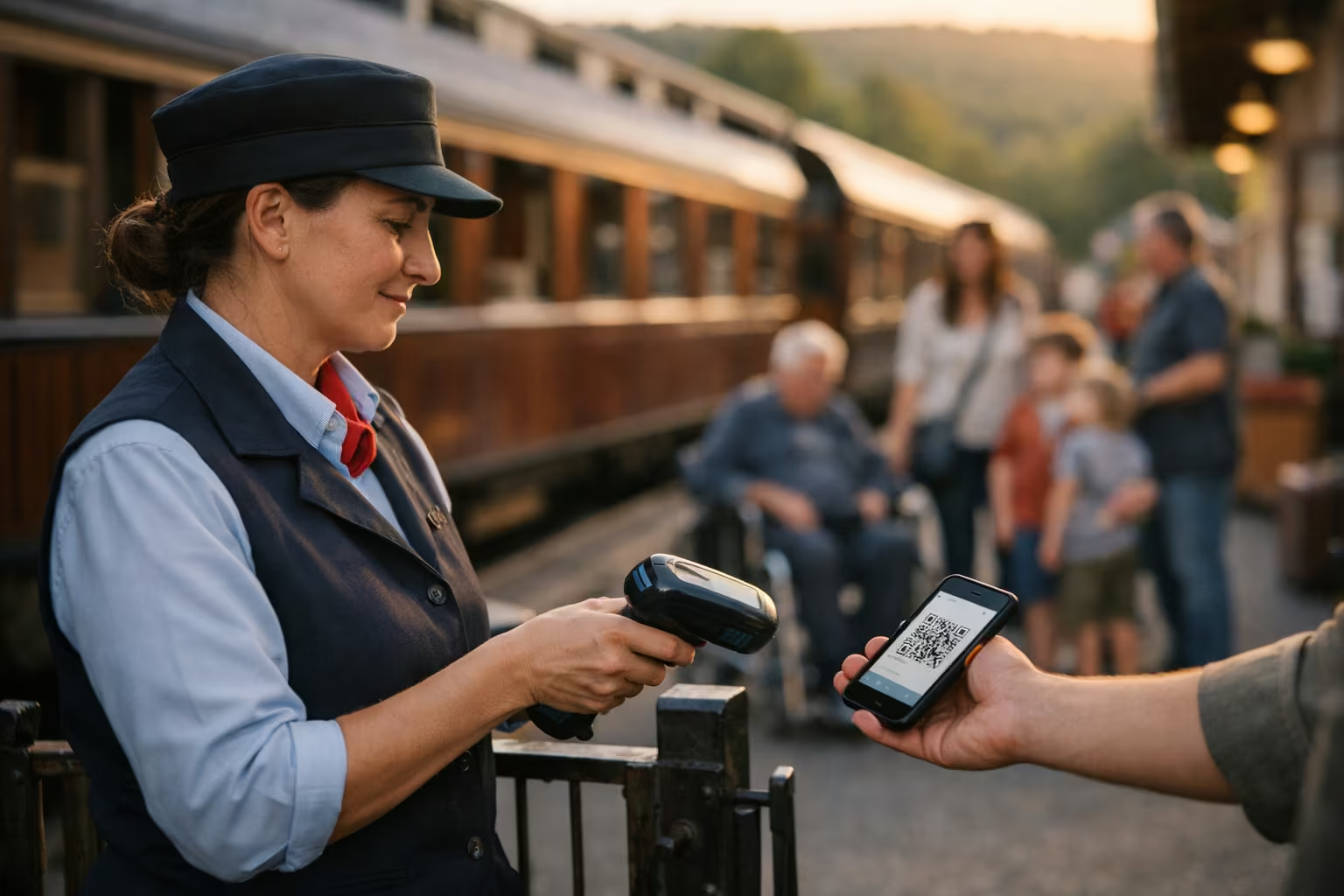
Platform boarding should not be a separate system. Mobile QR scanning tied directly to the reservation record gives boarding staff real-time capacity visibility, accessible seating flags, and the ability to verify group manifests without printing anything.
When the boarding system and the booking system are the same system, the experience is faster and the data is clean.
Fall foliage. Holiday trains. Easter specials. These windows need different rates, and configuring them should not mean logging in and manually changing prices on the morning they go live. Look for a platform with dynamic pricing and scheduled rate changes — rules-based or time-triggered — so peak pricing activates automatically and reverts automatically.
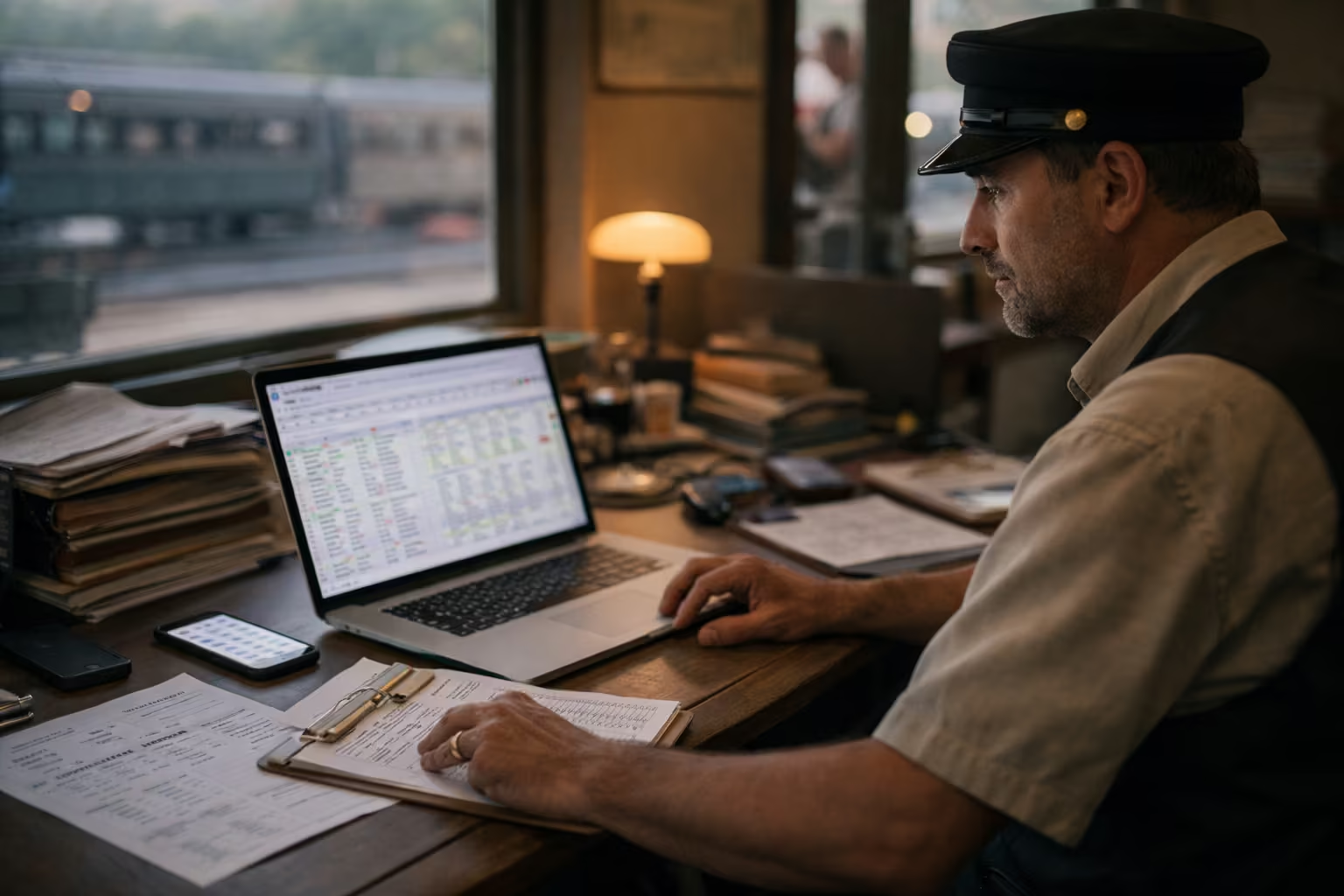
If answering those questions requires an export and a spreadsheet, you don't have reporting — you have a periodic manual project. Unified real-time dashboards that pull ticket revenue, add-on revenue, group bookings, and retail into a single view give you answers while the train is still running.
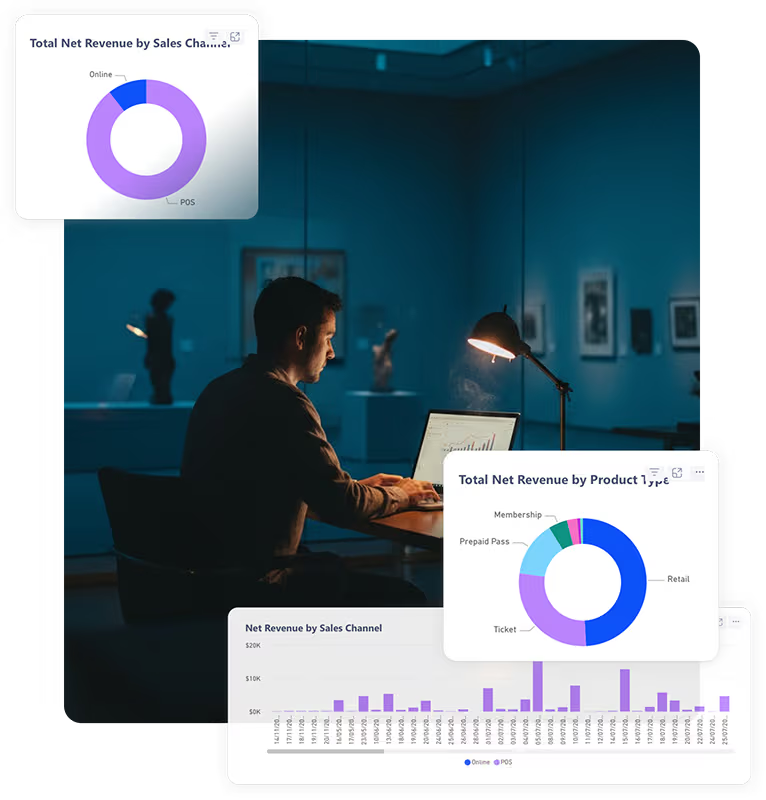
For deeper analysis, Power BI integration keeps your data current and accessible to anyone in the organisation.
This section matters as much as the feature list. Two platforms with identical capabilities can have radically different total costs and operational risks depending on how the vendor prices and supports them.
There are two dominant models in the market: flat SaaS subscriptions and per-ticket fees.
Per-ticket pricing sounds simple — you only pay when you sell a ticket. The problem is that it scales against you. At 6% per ticket (a common rate for tour-focused platforms), an operator selling 40,000 tickets at an average price of $50 pays $120,000 per year in fees alone — before payment processing. At a flat SaaS rate, that same operator pays a fraction of that, regardless of volume.
Ask every vendor to model your actual cost at your current ticket volume, not a hypothetical starting price.
Implementation should be included in the contract, not billed separately as a professional services engagement. The typical timeline for a platform built for this vertical is 90-120 days. Longer implementations (6–12 months, common with enterprise-tier systems) carry significant go-live risk — particularly for scenic railways with narrow operating windows where a delayed launch can cost an entire season.
Ask specifically: what happens if we need to go live by a certain date and implementation runs long?
This is the question that most vendor conversations don't get to — and the one that matters most. 24/7 support is table stakes. What matters beyond availability is expertise: is the support team staffed by people who understand attraction operations, or by generalist tech helpdesk staff who will escalate a weather-cancellation refund issue through a ticketing queue?
Ask for a support contact during your evaluation. The response time and quality of the answer tells you more than any SLA document.
If the answer is no, proceed carefully. Vertical-specific experience — in implementation, in product development, in support — accumulates from serving the vertical over time. A platform currently used by Verde Canyon Railroad and Mount Washington Cog Railway has encountered the real operational problems scenic railways face and has built solutions for them. A platform that's never served a heritage railway is guessing.
Use this as a reference when comparing platforms. Ask each vendor to demonstrate — not describe — how they handle each of these.
The right questions cut through feature demos quickly. Take these into every conversation:
Any vendor that can't demonstrate this live — not in a mockup — hasn't built it for this use case.
The number of steps and systems involved tells you everything about whether it's a native feature or an adaptation.
If the answer involves manual steps for more than the initial decision, the platform wasn't built for outdoor operations.
Get this in writing. Per-ticket pricing models look inexpensive at low volumes and become significant at scale.
The answer reveals how confident they are in their own process.
Ask for a support phone number and call it. The experience is the answer.
If they can't provide at least one, this should be a significant flag.
This tests whether the system is actually end-to-end or whether there's a gap between what guests book and what staff see at the gate.
Every platform will check most boxes on a feature list when a sales team is walking you through a demo.
The difference between a platform that works for scenic railways and one that's been adapted to work shows up in the edge cases: a weather cancellation during your busiest weekend, a charter group with a complex deposit structure, a guest who booked an accessible seat three weeks ago and expects it to be waiting for them.
The evaluation criteria and questions above are designed to surface those differences before you commit.
Scenic railways like Verde Canyon Railroad and Mount Washington Cog Railway have made the switch to a platform built for this vertical. If you're in the process of evaluating options, see how RocketRez works for scenic railways — or speak with an operator who's already made the transition.