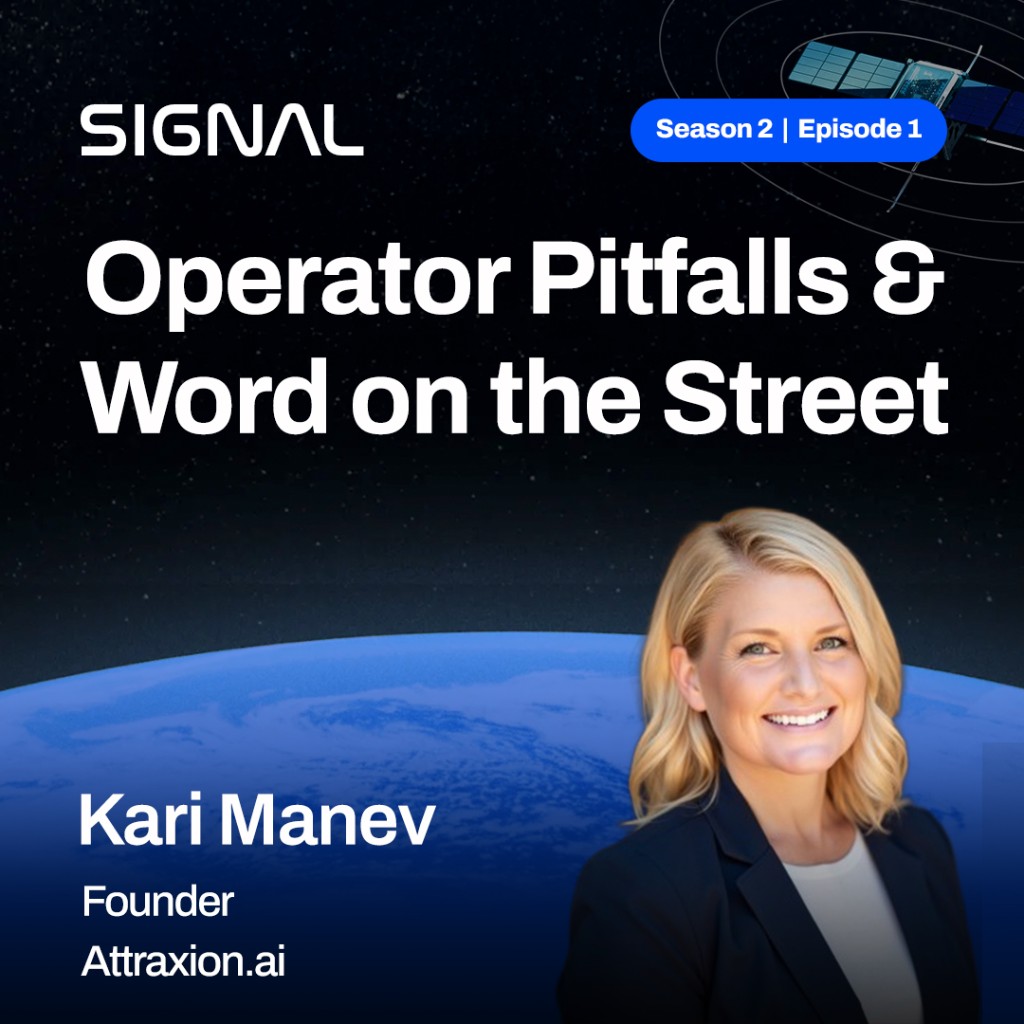




You’ll hear about:
- Why open-date tickets should be a premium product, and how rewarding guests for choosing a date pays off
- How one park moved from variable to dynamic pricing and is already 11% ahead of its best year
- The operational payoff of advance purchase: better forecasts, smarter staffing, and kitchen pars that hold up on a busy Saturday
- Why cart abandonment recovery may be the single fastest revenue win for most operators
- What RFID taught operators about evaluating technology: when 5–12% utilization creates long lines at the front gate
- Where the attractions industry really stands on AI, and practical places to start, from analyzing guest reviews to building internal tools for staff
- Why every operator needs an AI policy before a key employee walks out the door with the tools they built
- Why the best time to make a technology decision is during the busy season, not after it
Timestamps:
(00:00) — Introduction: Meet Kari Manev
(01:24) — From Six Flags lifeguard to waterpark director of operations
(04:25) — Why Kari moved from operations into revenue technology
(07:16) — What keeps her hooked, and "the Jane problem"
(08:53) — How RocketRez and Attraxion.ai feed each other
(12:25) — What operators are saying in summer 2026
(13:42) — Is it a technology problem or a people problem?
(15:24) — Ticket scanning, NFC, and the human side of technology
(18:26) — The RFID lesson: when low utilization creates long gate lines
(20:42) — Why technology can't be evaluated in isolation
(23:55) — Using AI to stress-test decisions against guest and team impact
(25:01) — How Kari helps operators evaluate new technology
(27:16) — Money on the table: the case for dynamic pricing
(29:57) — From "we can't raise prices" to busier than ever
(31:50) — The hidden benefits of advance purchase: forecasting, staffing, and kitchen pars
(33:12) — Cart abandonment: the revenue most operators aren't recovering
(36:28) — Price transparency and the "as low as" problem
(38:30) — If you could only pick one: cart abandonment or dynamic pricing?
(39:51) — The AI reality check: where the industry actually stands
(45:46) — Choosing the right AI tool for the job
(49:09) — Why every operator needs an AI policy
(51:35) — Where to start with AI: just ask
(53:14) — When AI tools have personalities
(55:17) — The buying cycle: why summer is the right time to decide
(1:00:00) — Fighting analysis paralysis
(1:01:56) — The gap between what vendors build and what operators need
(1:04:18) — Mobile ordering, wait times, and fairness
(1:07:07) — What attractions can learn from ski areas, hotels, and Chipotle
(1:08:39) — What will separate the operators who pull ahead
(1:10:41) — The one thing to do right now
(1:12:07) — How fast will the industry change?
About Kari Manev
Kari Manev brings over two decades of experience in waterpark operations, hospitality, and technology. She began as a lifeguard at Six Flags Hurricane Harbor, later leading training and grand openings for CoCo Key Water Resorts and training teams internationally at SST in the UAE.
Today, she helps attractions improve revenue and guest experience at RocketRez and, as founder of Attraxion.ai, helps leaders put AI and emerging technology to work in their operations. She serves on WWA’s Technology Committee and the board of The Gift of Swimming in Windermere, Florida.
Connect with Kari on LinkedIn.
🔗 Links & Resources
- Connect with Kari Manev on LinkedIn
- Learn more about Attraxion.ai
- Learn more about RocketRez
- Follow John and Tim on LinkedIn
About Signal
Signal is the podcast for attraction leaders shaping the future of guest experiences. Hosted by John Pendergrast and Tim Samson, we bring you candid conversations with industry innovators who are building the experiences that bring people together.
Subscribe to Signal wherever you get your podcasts, and visit signal-podcast.com for more episodes and resources.
This episode of Signal is brought to you by RocketRez - powering the world's most successful attraction operations.
Tim Samson (00:00)
Today we're gonna dig into the patterns she's seen, the pitfalls operators keep falling into, the revenue opportunities hiding in plain sight, and where the industry really stands on AI when you get past the LinkedIn posts. Kari, welcome to Signal.
Kari Manev (00:31)
Thanks. Glad to be here.
Tim Samson (00:56)
All right, so let's jump right in. So Kari, we've known each other for a while now. Most people think it's longer than we actually have, right? So tell people a little bit about your background. How did you end up in the attractions industry? What's your origin story?
Kari Manev (01:24)
That's going way back. So my origin story in 2005, I started as a lifeguard at Six Flags in Chicago. And when I got that job, my parents asked me, we didn't even know you could swim, let alone become a lifeguard. So that is yeah yes, 200 yards at least. Still true. So originally became a lifeguard at Six Flags in their opening year at the park in. In Chicago and kind of worked my way up the ranks there, training supervisor, trained, you know, hundreds of lifeguards season after season, and migrated that experience into hotel water parks working for a chain called CoCo Key. And that property management group, they were looking to expand to multiple locations throughout the US and had a really aggressive growth plan. Plan. But then the 2008 whole entire crisis happened and growth slowed. Ended up on my last opening, which was in Orlando, finding myself as the director of operations for the property. Here, still based in Orlando, 11 years later. So worked in operations for that group, standardizing all the different locations that we already had in place as well as built new locations. I did three grand openings in three months, which was time I don't want to remember in my life. Yes, it was wild looking back on it, but definitely earned. My stripes back then, translated all of that experience into, you know, as operators, you can kind of take a blueprint and place that across different various departments. So became an asset at our property here in Orlando, ran a lot of trainings for the entire HR department, not just you know the attraction side of the business, and took all of that experience. Really leaning into the industry, speaking at various conferences and associations, starting to teach lifeguarding instructor classes with Ellis & Associates, the lifeguard program. That experience actually got me an opportunity to move abroad. So I lived in Dubai for two years, teaching lifeguards all around the world. Super cool experience and time in my life. I was, you know, mid-20s getting to see a lot more things and typical attractions leaders get to see. And at the end of my time with my contract there, just decided I really wanted to lean into the industry and be an advocate for a lot more of the things that were going on locally. And so came back into a role back at the resort, but managing a lot of different departments, took on food and beverage kind of similarly, I would say, pains and headaches from the times of openings. But really learned to take and apply. Standards and operating procedures across departments that were really struggling with solid leadership, showing them you know there is a solid path once you have great procedures in order. Just really reliant on building culture in those departments and became an asset at that property. Got a little bit of fatigue just in the litigiousness of the United States and just feeling a lot of pressure being an operator around the time that you know there was major headlines with large emergencies and you know potential criminal action being taken against attraction leaders, it just became a little bit more worrisome for me to stay in a leadership position and found myself in technology somehow. So jumping on into technology, I saw an ad on IAAPA.org for a job Selling revenue management strategies to water parks and got to work from home. So nine years ago, that sounded super cool. I could wear my leggings and, you know, sell something that in hotels you're doing every single day. You know, heads and beds, you're trying to maximize the revenue opportunity leading up to a vacation or a trip date. And why was the attractions industry not doing the same thing? So I bothered the heck out of the sales department there until the leader interviewed me. Got the interview, ended up working for Liftopia was the organization at the time, for five years, really just helping operators understand you can start to, you know, de-risk yourself from all the variables that struggle, you know, to drive revenue for particular trip dates, and absolutely fell in love with the entire idea of driving more advanced ticket purchases. And loved that. Ended up turning that into a story working over at Sensible Weather. Again, you know, just de-risking the revenue opportunity for outdoor leisure activities. And those two things were native in RocketRez and kind of ended up here because of that. You know, under John's leadership, RocketRez being an avenue where operators could find those two things just integrated fully into the system is kind of how I arrived here.
John Pendergrast (06:49)
So you end up in the software space, Kari, and like you're like, hey, I can work at home, I you know, and I can I would ask if you're wearing shorts right now, because I feel like you're you look very professional and then you're probably wearing shorts and flip-flops. Yeah, so but you end up you end up in this industry, you end up in a couple different software businesses, including RocketRez.
Kari Manev (07:00)
It is definitely a mullet situation. It is business on top and leggings on the bottom. Always.
John Pendergrast (07:16)
What is it that keeps you going? Like what is it, what's the hook, right? Like what is it that in your kind of your heart of hearts is like the thing that makes you go, hey, this is what I want to do?
Kari Manev (07:25)
Yeah. I think for me it's always about problem solving and finding solutions for operators who they're thinking about things from a very like concentrated lens a lot of times when I'm talking to them from the sales role at least, and trying to just help them step back and say, does it always have to be that way or is it this way because you know the leader before you had it this way or whatever the case is there? So a lot of times what keeps me. You know, hooked is getting to problem solve from a different seat and helping operators just take that step back and be able to see it from a different lens.
John Pendergrast (08:05)
Yeah, I often call that the and no offense to any Janes out there, but I call that the Jane problem. The that twenty years ago Jane did something and in a s and created a spreadsheet that is how the business runs, but nobody remembers why. And why we do it that way. And yeah. So yeah, I appreciate that's a that is a fun moment when you can have an operator go, Hey, wait a minute. Maybe we don't need to do that. And there's such a satisfaction in those moments. Yeah. We've all had those experiences.
Tim Samson (08:37)
Yeah, I think of the Excel sheet and you're like, we don't need this anymore. And then sometimes you do like you get rid of it just because Jane made it 25 years ago doesn't mean that it's not like driving something else. But those are always fun moments.
John Pendergrast (08:41)
Right? Yeah. Yeah. How do I get Microsoft How do I get Microsoft to access to work? It doesn't work anymore. Yeah, because they discontinued that product ages ago, but that's how we did all our finances, you know? Yeah. It's a pull start. Yeah.
Tim Samson (08:53)
This was written in the AS/400. Why is the screen not green? Kari, you also launched, Attraxion.ai, on the side, where you work with attraction leaders on AI. Those are kind of two different worlds. Like, how do you take the technology side and consulting on adoption of technology? How do they feed each other?
Kari Manev (09:19)
Yeah, when you say two worlds, I'm struggling with that. I think that they absolutely parallel and then also, you know, intersect often. A lot of times in the conversations that I'm having day to day here at RocketRez, it's absolutely, you know, we have this problem, how do we solve it? And it doesn't always have to be the technology you're looking to purchase. You know, sometimes it's something that you can build on the side, sometimes it's just automation would help you a lot. And sometimes it's not the technology at all. So definitely that is from you know my seat in the sales role here. As far as Attraxion.ai and how I'm helping those leaders, it's really about breaking down outside of you know the revenue centers. What else is a struggle for you today? And what else could we look at? Things that sometimes come up and then. Organically switch between the two? Have you know, used an AI engine to go and check all of the reviews for yourself on Google and or wherever you're collecting reviews most and just seeing from the guest perspective in the last six months, what are our biggest pain points for them? Where are their bottlenecks or where are the best experiences throughout, you know, our attraction? And then building either tools or building procedures, building Or replacing technologies if that is the issue. A lot of times it's just going beyond the revenue centers and you know traditional ticketing or point of sale that I get to help them on the other side, as well as just automating processes. You know, we are a technology here at RocketRez, and maybe there's something that we don't have that you love. How can you build something alongside our system to just get everything that you were looking for? Kind of just both of those parallels. I think they intersect more than they you know, are different.
Tim Samson (11:21)
Yeah, I agree with that. I think you know it's difficult for. I think it's difficult for technology companies sometimes because you have to solve for everyone right? You have to create a solution that is good across the board and there are times when there is a right sized solution for you individually in your operation that you can implement on top of systems, right? So it's pretty cool so. Kari, you're familiar with our format here. You've listened to at least a few of these or listen to all of them. Okay, fine. All of them. So we do these in sections. So I'm to go ahead and move on to the next part, which is part two of you from the field. So as part of your day to day, I don't know for the last 20 years, I guess you've talked to operators consistently across different segments, different sizes, different needs. Right now. Today in this moment, what's the one thing that you keep hearing over and over from?
Kari Manev (12:25)
In this moment, June 2026. Let's see. I think there's a couple of themes. One is just this we had, you know, the fall of COVID and then the rise of outdoor leisure demand and then kind of this like stagnant, you know, sophomore slump, if you will. And th there's this, are we out of it yet? You know, folks do want to travel. My husband's a huge soccer fan, so the World Cup is in town. We're all expecting that, you know, tourism is back to you know, a certain percentage, but I think just the economic situation, there's a lot of factors that have people just still wondering, are we in the slump or are we on the upswing? So I think that's definitely one of the main things that I'm hearing about. And then how do we future proof, how do we weather proof, how do we, you know, provide strategies that still get us to the numbers at the end of the day. Alongside that, I think pretty consistently, where is the tool that's going to do what I want to do? I think those two things are the common themes that. I kip seeing in summer of twenty six.
John Pendergrast (13:42)
So when you say that like where's the tool that we're looking for to do the thing, I mean, I think that's something that changes on like a monthly basis. It's like now I want to do this now, especially with the advent of technologies like AI and these kind of things where, this is the next cool thing. And I mean the industry, our industry is like both exciting and also kind of funny about this, which is like it's shiny. And if there's something shiny, we get really excited about the shiny thing. And there's advantages and disadvantages to that kind of methodology, right? So is it when people are saying, like, listen, I'm looking for the right technology, is it a technology? Or is it a people thing? Is it something else? What do you see in your kind of travels about what's actually holding people back from getting the outcomes that they actually want? I think we tend to look and go, it's technology, but is it?
Kari Manev (14:34)
Yeah. And I mean, just based on our last conversation, you know, when it comes to is it the technology, is it just the actual procedures that you guys could implement? Absolutely things that could be broken down from that standpoint. I think in terms of what there is a craving for, just things to make their lives easier. You know constantly running around the parks, working in an F&B stand. Tim and I have these scars from our history of working as operators. So it's really just that like how can I automate more? How can I have it help me forecast more? How can it give me the signals that I think exist out there? And it doesn't always have to be, you know, inside the technology. Maybe it's something that you build up.
John Pendergrast (15:24)
Yeah. What's funny, like in the early days of ticket scanning, and there were a lot of operations that would say, we want to do ticket scanning. I mean, this is decade and a bit more ago, but it was like we want to do ticket scanning. And they would step out to do ticket scanning and then within a month they'd stop ticket scanning and you'd be like, Why are you stopping ticket scanning? They're like, Because on paper this works amazingly. The technology is great, like it's awesome, but in practicality you add human beings to the equation, and all of a sudden it becomes almost impossible to get the scan done. Because people can't buy their ticket or the employees don't want to scan, or you know, you have some sort of issue with your internet or what like whatever it is and you end up with these kind of pockets. I feel like sometimes that's where technology sits, where there's these fantastic ideas out there, but getting people used to that enough. Like we're very used to now all of us carrying these cell phones around with us. So we're used to a certain kind of form factor, we're used to a certain way of approaching things. And so like you're seeing a lot more NFC now. Like people are like, my phone, I can just tap my phone, right? But you go back eight years, seven years, and we very sincerely thought about rolling at NFC here at RocketRez. But we couldn't ever figure out how to get people like the average guest to have it enabled. Because, you know, iPhones might have it on, but Androids didn't, or vice versa. Like and so like there's these really great on-paper solutions that you see and operators go, that would be the thing. And then it's just like the people process of these kinds of things sometimes is the longer tail of those kind of solutions and how you actually so I mean you must have some stories. Carry of these kinds of things that you've dealt with over the years of trying to solve for the people equation. I'm gonna put you on the spot. You don't have to use names, you can make fictionalized names. You've been around for a while in this space and you've seen a lot of different things, both as an operator and then now in the software space. What like do you have any examples? Is there an example of like, hey, this technology sounds really great, it even works, but when you add the guest into the equation, it doesn't work. It's as or we had to solve some different things like to get this technology to actually work.
Kari Manev (18:26)
You know my thoughts on RFID. So I guess that's a great example. RFID, I think, you know, 20 years ago it hit the ground running. And I remember vividly going through those, you know, five openings where we were trying to change our point of sale, roll out an RFID program. We're majority of our guests were staying in the resort. And so bottlenecking the front gate in order to put wristbands on every single guest, load their credit cards so that they could finally charge around the property. We literally had campaigns where we would bonus the front desk cashiers for how many people they had, you know, enabled RFID for. And so if you were the top winner of the day, you absolutely, you know, would get $10 out of your paycheck or something. Over the course of a couple of weeks, that definitely adds up for someone making seven five an hour back then. So those little spot bonuses to try to achieve, hey, we really want this program to succeed. And in reality,. You're a guest, you have to stop and have this massive line of three or four hundred people trying to do the exact same thing at the exact same time for the convenience of scanning your wristband when you want to order Pizza Hut or AW or whatever else we had as an outlet within the facility. And then, you know, you get to go to the arcade and you get to scan that wristband and charge an arcade card. As we started to roll that f program out, the software started to catch up to things like. The child pushed the button for a hundred dollar arcade card and dad couldn't control the spending limit. And then, you know, there's the feasibility of it of I'm a busy mom, I don't want to wait in the line. Sure, that sounds convenient, but I'll just tell you my room number and charge it to my room anyway. It's the same impact. And so I get that's coming from a resort perspective. That's not always the case. But I think when we're. You know, looking at the outcomes of utilization, does it really make sense to try so hard to make this program work when there may be just an alternative way? Yeah, or a better solution.
John Pendergrast (20:37)
Yeah, better solutions. Yeah. Or at least yeah. And maybe simpler solutions. Yeah.
Tim Samson (20:42)
Well, I think this goes I think it goes beyond it goes beyond technology sometimes and it's just the implementation of things Within the park like it might seem like it's a good idea And the one that I always go back to is there's a park that wanted to make every ticket holder a season pass Right? Like the differential between the ticket and the season pass was not that far apart. And it's like, well, if I have a season pass, I'm more likely to come back. Right. And that's what the data dictated was season pass orders are more likely to return for a second visit. Fair point. Right. But you can't look at these in isolation. I don't think you can look at technology in isolation either from the operational side, because in that particular instance,. Creating a season pass and taking a photo and registering someone is way different than just scanning and taking and letting them into the park. So in order to do one, they created this other backlog within the park that I don't even know if it was successful or not. I don't know what the outcome was. I just know that from an operator standpoint, it created a lot of turbulence on the ground. And because of that, I don't know if it was ever successful. But it's like some of these things, like we don't necessarily put ourselves in the guest shoes all the time.
John Pendergrast (22:01)
What's funny, I mean, I mean, I think guests also, I mean, we're a little off trail here, but I think it's an interesting conversation. And I'm gonna tell some stories now too, because I wanna I don't want to be the only one that didn't. But so 20, I think it's 26 years ago when I f wrote my first e-com engine for this space, right? I f I wrote one of the first one of the early online ticket sales for a company I was working with. And we were given out ten dollar off coupons. Like. The thing cost thirty-five dollars and we're giving you know thirty percent almost thirty percent away just to get incentivization for people to buy online. Now we're like that's insane, but that was where guest was at that point in time, and the technology wasn't the limiting factor, it was the guest that was limiting factor. And then one of my favorite stories of all time of like a really awesome description of how to deal with the human in the equation. So we all know USB cables, not the USB A cables, the big ones or whatever you plug in. They did this study on this, and there's only one way to plug them in, right? Like they have there's only one. Do you know the average amount of attempts for plugging in is? Like just a this huge dust? It's three. Yeah. It right? Like and I do too. And I'm like, why is this a thing? And it's because the human in the equation part, right? Like you could literally look at it and go, it goes in this way.
Kari Manev (23:12)
I was gonna say I hit the average. I still hit the average.
Tim Samson (23:12)
Three or three and a half, yeah.
John Pendergrast (23:25)
But we don't do that. We just kind of fumble with it until we get it to go in. And usually it's like that didn't work. Don't want to press it too hard. Flip it. Okay, that's definitely wrong. Must be the other way. And there we are, three. Right? Like that is such an equation. And I think oftentimes as technologists, we end up locked in this vision of it's all about the technology. But at the end of the day, it's all about this strange combination of the human who is wildly unpredictable in some ways and inherently predictable in others, and then the technology, right? And how do.
Kari Manev (23:55)
Right. And I think definitely where AI can come into play is starting to, you know, workshop some of those outcomes of if I am a resort and I'm requiring the technology to have RFID support, is it going to be utilized and try to, you know, research or use AI to kind of come up with some of those storylines and create what is the guest impact? What is the impact for our team? What bottlenecks could I expect, you know, at our front gate? And really start to harmonize what does this decision look like versus just looking across a spreadsheet and saying, they're gonna spend 3% more because the person selling it said it would. Yeah, I mean, I still have this RFID conversation still in 2026. And when people actually look into the data, you know. Five, six, twelve percent utilization, is that enough to have long lines as the first attempt or experience that a guest encounters when they come up to your gate? You gotta kinda have that balance for sure.
John Pendergrast (25:01)
So I'm gonna I'm gonna risk accidentally making this a RocketRez podcast in that sense. And say the following. Everything that you've described in our stories that we've been talking about, talk about the fact that it is a art as much as it's a science. Right. And that having people in the room that have been through that equation and understand the difficulties and the experiences that they've had going there, it's more than just slapping in technology. So as operators are reviewing and evaluating new technology, how do you approach that? Because of course we tend to get kind of blinders on when we're focusing on technology of that shiny. But how do you approach operators from that perspective? Like what is your methodology for having that conversation?
Kari Manev (25:48)
Boy. I think for me in particular, it's both knowing the path that they're potentially walking down and having experienced it in, you know, certain instances myself and just being able to speak the language. I've literally had someone say, Thank you for using the word entitlements. You do understand my business. Yeah, so I think that's part of it, but just really helping them s see.
John Pendergrast (26:10)
Right. Yeah, the nomenclature, yeah.
Kari Manev (26:18)
What could other outcomes be? And you know, myself included, could we be analyzing this against personas, against how does this impact somebody who's, you know, single, they just want to pull out their phone and get in the park versus the mom who totally wants the bands and wants that experience for their kids. They want them to get to wear it to school or summer camp or whatever and brag about visiting your park. I think just being able to walk all those storylines and then help paint that picture of. Here's how operationally it will impact you, here's your guest experience and how it will impact you. And ultimately, you know, having that financial conversation about the revenue opportunity or you know, something that's going to cost you money to get minimal results potentially.
John Pendergrast (27:02)
Yeah. And so you're I mean you're describing a partner, you're trying a partner process of saying, Hey, this is we can talk through all these things. But that's a great segue. You said the money part, and maybe Tim you want to move on to section three, which is coincidentally called money on the table.
Tim Samson (27:16)
Yep. So Kari, you've gotten some numbers from the conversations that are pretty eye opening, right? Can you walk through walk us through those and what you're seeing in terms of the things that operators are leaving on the table or the cost of not doing something?
Kari Manev (27:36)
Yeah. So I think, you know, definitely from my background in revenue management, it's still a passion topic of mine. I will speak every single day. I mean, we were even at a conference that's not an industry I'm familiar with and I felt like I was attacking someone about not using dynamic pricing and I even apologized to him. But I think you know if I can get on my dynamic pricing soapbox for a minute and I know we've had plenty of conversations here on Signal about that. I've listened to those episodes more than once is really just if guests or sorry if. Properties and partners are still allowing the guest the freedom to choose whenever they want to redeem their ticket. The exposure is so high for you know, being able to predict, being able to staff to those numbers. Just leaving that all to chance. And if you're Disney, sure, you know, you have that flexibility. But a mentor of mine once said that ticket should be a premium. And it's absolutely true. If you want flexibility, you want to be able to redeem it whenever you want. You either have a premium ticket or you have a get in as much as you want this season called a season pass. And so you are charging for that convenience factor. Folks that are still using just. Choose your date because, you know, the stories are we're a destination for specific clientele. We're a destination, you know, in a specific market. We know our market, our guests come the same week every single summer. That's fine. You know, continue to offer that product, but why don't you also try offering a product where they get a discount and a reward for choosing to tell you when they want to come? I think that's one of. The biggest things that majority of the industry still hasn't fully grasped is moving from variable to truly, you know, demand-based pricing or even just moving from you don't need to tell us when you want to come whenever you want, down to at least variable pricing, you know, different price for different dates, even if it's the same price and just choose it on the calendar. I think absolutely is an opportunity for a lot of parks. We had a partner just. Go live with it recently and they're already doing eleven percent better than their best year. So and they were on variable pricing previously.
John Pendergrast (29:57)
There's a lot of fear though. Like I mean I remember operators I remember one of the first groups I started working with in the space and they were like, We have three hundred rates. Right. And you're like, okay, but you sell one thing. Like it's like you sell one thing. It's one ticket type, but you have three hundred different rates. And some of them are like a two apart. And you're like, what is going on? And they're like, well, if we raise that a nickel, then the tour groups aren't gonna come. And or if we raise our pricing, our like standard guest that comes isn't gonna do it, they're gonna go down the road to do something else. And over and over again, you see these people go through this process, and then eventually someone gets brave and decides to raise their price. So there's this really great story in the middle of COVID where it was a company that came in with they had a $25 fee. And they should have been charging $80. But they were charging twenty five dollars and they were adamant that they had to charge that. Well, COVID happened, and of course, all bets were off in COVID, and you could try and experiment with whatever you wanted. They exited COVID at sixty-five. And they said, We're busier than we've ever been before. Only now we're getting paid for it. And I think they've continued to go up. And I think it's just fascinating to see this. I there was another one. It was an I think it an IAAPA presentation of a zoo or a park in next to another park, and one was a little bit more upscale and the other one was a little bit more like early family kind of stage. And they had locked prices for decades. And finally the upscale one went, you know, we're kind of a little bit more upscale, maybe we should price upscale. And they saw an increase in guests and increasing guest happiness as well. Like just fascinating to watch how these things kind of play out.
Kari Manev (31:50)
Yeah. I think just the impact that you don't necessarily expect. You know, you move into a different pricing range than you may expect for sure, you know, the numbers are hitting the bottom line. But being able to just balance the guest counts on a Saturday is what I typically used to get phone calls for selling that product. But then there's the if you had them buy multiple days in advance, you have all of the understanding of. When your guest count what your guest counts are gonna be. You can start to forecast much easier. You can staff to that. So there's definitely savings on the labor side, better preparations, you know, having better pars in the kitchen so that you don't run out of tenders at two o'clock. Those are absolutely, you know, necessary things to plan for. But the guest was also planning. And when they opened the they opened their wallets to buy their tickets seven days ago. They now are coming essentially with new funds available and a new budget in their mind when they step into the gate. And I think that's one of the things that's just not at all said when there's a dynamic pricing conversation is that, you know, you expect the rate increase, your effective ticket prices go up. Some people are upset, you know, when they have their tickets go down a little bit. But if you look at the happiness scores, if you look at the volume that you participated in, your numbers will.
John Pendergrast (33:10)
Yeah, it's up and to the right.
Kari Manev (33:12)
Yeah, your numbers will rationalize and I think that's definitely a missed conversation. And then, you know, there's other things that the tools can help you with, like something that Tim and I talk about pretty often is things like cart abandonment. If your solution can't help you, maybe build a middleware or build something else just to be able to help you recapture that guest and not leave that money on the table.
John Pendergrast (33:35)
Yeah, I mean what is it? I think industry conversion rates on web or s for e-commerce 30 and 40 percent, something around that mark. Which I mean that's certainly a lot on the table. And you go, well hold on. If all it takes is to send out an email after the fact saying, come back, and you know, I've actually purchased off those before. And I feel myself I'm pretty immune to those kinds of things, and yet I've still purchased. And I mean the numbers I've seen somewhere between 11-15 percent, right? Like that you're just. There's just that much money that's sitting on the table. How often do you find people in that kind of blind spot of not having optimized those kinds of things?
Kari Manev (34:16)
Often do I find them? Majority of the time I find them by they tell me that they don't have this, so they're looking for it and craving it. But even you know, I've been engaging in conversations through Attraxion.ai, just helping businesses understand where. They may be leaving that money on the table. And so proactively asking, do you guys have any marketing strategies or, you know, tools that you guys are utilizing to get guests back into the checkout funnel? Even down to dri driving them directly to what was in their cart. And when the answer is no and the annual revenues fifty million dollars, it has me scratching my head much higher that, you know, much more than if it is that mom-and-pop shop FEC that, you know, they're just breaking even, you know, essentially every single season. So that's I guess eyebrow raising for me is that you would expect those businesses that have grown to that size and scale, that they are the ones that are leading us down this path. And they still have some of these outliers.
John Pendergrast (35:21)
Well, I don't know if you remember this, but like probably seven to ten years ago, there was like a this big push. Of some of the more long-tail solutions coming out and saying on their websites, like you're gonna improve your bottom line by 30% year over year. I think it originally was like 15% and 30% year over year, and you go, that's just not really a thing anymore. Like that level of improvement is really hard to achieve. There's not really those giant leaps. Except, I mean, and we maybe we need to rename this section from money on the table to like low-hanging fruit, but if all you did was cart abandonment. Like enablement off cart abandonment and dynamic pricing. You're like in that range.
Kari Manev (36:04)
Near that range. Yeah, absolutely. Absolutely.
John Pendergrast (36:08)
Yeah, which I mean if you think about that from an operator standpoint where you're even the mom and pops are going, my goodness, that's the new boat we like the down payment for the new boat we need, like or like whatever that is, right? Like that's a significant amount of opportunity in front of them. And should be kind of table stakes at this point in the equation. So.
Tim Samson (36:28)
Well, Kari, we've talked about a lot about like user flow, right? Through the web store and conversion. And there's a few that we talk about all the time with that. And I think that's one of the factors that goes in. But if I put my marketing hat on and I tend to think about like cart abandonment, right. There's kind of two schools of thought on this. One is if you're not publishing your price anywhere in order to see the price, you have to get in the car anyways. Right? Which is good because you've already gotten them halfway there. Right? So then the next step is just get them to purchase. So you use the psychological triggers, you know, like there's only so many laughter, this discount or whatever. And you get the FOMO factor, but at the same time, you're also increasing your cart abandonment, right? Because you're not showing your price at the same time. Right? So.
Kari Manev (37:21)
Right. Equally throwing shade at some marketers, if you're throwing that price out there, you know, by as low as $19.99 and it's buried in the last day of the season, that's also not great. You're gonna find a lot of abandoned cart from those messages too. So.
Tim Samson (37:38)
In the end transparency and pricing right? Like if you're saying buy as low as $19.99 and you have two of those available every day. That's not really being that transparent with it, right? So I mean, I remember working with some companies doing pricing that price that low price wouldn't even be set at the lowest price. Right, like it would be set further down the bottom like as low as $22.99 or whatever. When real when realistically there's tickets at 1999 right? His last thing you want to do is advertise something and someone not be able to find that price. So.
Kari Manev (38:16)
Yeah, I'm thinking about clients we absolutely consulted to market it that way. You know, just even in the launch, you will shave down the amount of phone calls into you that are angry moms looking for that deal. So yeah, absolutely.
John Pendergrast (38:30)
So if you look at all this and you say kind of to sum it up, just basically like if you could only pick one of these two this year, which one would you choose? Cart abandonment or dynamic pricing?
Kari Manev (38:42)
So biased, so biased. I think, you know, it really depends, but the appetite to me would say folks would lean toward cart abandonment because it could be applied across anyone. It could be a yeah. And to you to your point, you feel immune to receiving these messages and you're still going to hit one, you know, every tenth time or something. So I would say if I was looking to deploy something new. I we heard a figure recently that was ten million dollars being left on the table from not applying cart abandonment. I would have someone's neck, you know, on my team just to be able to say, This is what we are focused on today. That is worth chasing, go figure it out. And so I think if it were up to, you know, you can choose one thing to do today, that would definitely be one I would take away if it's not already happening automat automatically.
John Pendergrast (39:36)
Yeah. It's one of those kind of last great improvements that you can do before it you know, th with the technologies that currently exist today, it's like that last thing you need to do to make sure that you've got all your ducks in a row. So it's very cool.
Tim Samson (39:51)
Yeah. Yeah. So we'll go on to the AI reality check here, right? You've been working with leaders on AI adoption through attractions. Where's the industry actually at? We see lots of AI things and there's lots of fanfare. But from where you sit, like what are operators really engaging with and doing?
Kari Manev (40:20)
Yes. I think at one point you said today something about the LinkedIn, you know, the fatigue. I myself don't even really post on LinkedIn anymore just because I'm so sick of it. So as far as where I see the industry, what I hear constantly, I also participate on a technology committee for one of the industry associations. And where. A lot of us started was, you know, using LLMs as a search engine against Google. I think majority of the industry is still there. You know, it's generating better responses. So we become more and more reliant, more trusting. And that's still where majority of the industry finds themselves. Occasionally give it some analysis to do with some, you know, uploaded spreadsheets. But where Could it be or where some of us that are a little bit deeper involved think it should be? You know, building out really great dashboards for your business and setting that, you know, MCP server on top of all of your data sets so that you can build out interesting dashboards. I know that there's a couple of attractions that I speak to pretty frequently that have built out not just a chat bot. But you know, five years ago that was the only thing that you could achieve in AI for our industry. Purchase a, you know, five figure chatbot. But now just building your own tools. To become a resource for your staff. It's an internal resource. I talked to one individual location that uploaded every single one of their arcade game manuals. And now when a staff person, yeah, when a staff person has a problem with one particular arcade game, they look at the screen, they show the error. To this AI tool and it tells them exactly based on the manual how to correct it. Seconds, you know, applying these things in the operations today where you didn't have to subscribe to a software, you didn't have to go purchase some fancy tool. Literally a team member built it by talking to a to an LLM.
John Pendergrast (42:25)
Yeah. So I mean Tim, you and I did a we did a presentation at a trade show in China or in February this year, regards to AI.
Tim Samson (42:32)
Yep. Boy, have things changed since February, though.
John Pendergrast (42:37)
I know. But most of that presentation just introductory, like here's how you're probably using it today, which is kind of like a search engine. And then you're gonna the next stage is gonna be MCP and RAG and those kinds of things and understanding how the tools might work. And then you start getting into agentic and then you start getting into like these other levels of things and the tools that you can actually put together. And it was would you say five percent of the room? Had gone past just the general prompt kind of stuff, Tim?
Tim Samson (43:13)
Yeah, I think if you count both of us in that 5%, yeah. Right?
John Pendergrast (43:19)
Yeah, it was man, you're making our presentation sound really small. There were people there. Yeah. Yeah. It was a small number.
Tim Samson (43:21)
No, think it was actually. No, there were people there. I'm just saying like, you know. Yeah, no, it wasn't. It wasn't that small, but no, but no, like in, know, here's my thought on it. Like it's difficult. It's difficult sometimes for us as technologists to kind of separate like where the operator should be right. Because we're engaged with this on a daily basis, and this is kind of like the big. Divide, right? Operators deal with guests every day. They deal with all the operations underground. Technologists deal with technology. We're in the know about AI and all these tools and things that are coming out. So to expect an operator to be able to do some things that we're doing with these tools, don't think is reality in some cases, but operators should definitely be experimenting with these things. Because there are so many efficiencies and there's so many things that can help the guest experience can help like the arcade manual. Like how much time does that save right? Or pattern recognition. John, we talk about this all the time. They're really good at pattern recognition. So you want to find out like what your busiest day of the season is just put all your data in right and it will tell you what it is. But on the other side of that coin I tend to think of into. Not an incident, but something that came up recently where someone was brand new to really using AI tools more advanced than ChatGPT, right. At an organization and they took, they took two reports and fed it in and said compare and contrast these and it's all about context in the way that they asked. And it said they're both wrong. Right? Like that was the output because the input was in fear, in furring that. That reports were wrong. But in reality, when you check that both reports are right. So like they were just looking at different things in different ways. So there are definitely benefits to this. And I think that the average operator should be experimenting with things like Claude and Gemini and all the other models and tools. And they all do different things. But you have to be careful about how far you jump over the fence right away.
John Pendergrast (45:46)
Well I mean I yeah, and I mean Kari, you do these kind of courses as well. You did one for a lifeguard seminar in January. I mean you're helping people in the room, and I'm expecting that very few of them had explored AI in any real depth yet. At the same time, it's like, does this remind you a little bit of like marketing managers like for website creation back in the day? Like are you I don't know if you're old enough for that, but like back in the day it was like, I think we might actually need to hire someone to build our website, right? Like almost that level of entry point.
Kari Manev (46:17)
Not that old. Sorry. I don't know about that entry point. But I think, you know, to Tim's point about play with other tools, they're all useful for different things. I when I first launched the company had, you know, sent out a server to a survey to a lot of different executives and just said How comfortable with this are you? Are you using it at all? I think 78% said not at all and don't plan to. You know, a higher segment said we would think about applying a budget towards this, you know, in the next 12 months. And those same folks come back to me now and say, like, hey, I finally started using AI besides just asking Gemini or Copilot to update my email to sound smarter. And it's that context slash, is it the right tool for the job that I think. We definitely do, you know, some service to the industry of sharing those things. A friend of mine had told me, hey, I finally used AI based on you telling me to, and put a request in to render a plot for a new attraction being added to their space and told me that he was gonna put it in Claude. I'm like, no, don't do that. And what spit out, it looked like a Minecraft, you know, image. It. It looked like Zelda, you know, and so I said, applying the right context is important, applying it into the right tooling is more important. Throw it in Gemini, throw it in ChatGPT this week, you know, it changes week to week. So I think that is something that we could definitely as an industry grow up in a little bit and somehow reach across the table as technologists to help operators, you know, kind of see what is available to them.
John Pendergrast (48:04)
Yeah, I've had some I've had some fun in the last year or so of jumping into the AI side of myself and learning a whole bunch of different tools and I feel like if you take a day off doing that, you're actually falling behind because the things are just moving so fast. But like the opportunity to walk in and then it's almost like a hobby now. You get someone who doesn't really know anything about AI but's interested enough to say, Well, can you show me some things? And you spend an hour with them. And at the end of that hour, it's almost like they've discovered water. Like they're like, Whoa, hold on. Well, I'll I need to and then. Call you back the week later and you're like, I've done so many things, most of which is really not useful yet. But they're they've now hit that early stage onboarding of understanding how this works. And you're like, it is very interesting, and it's such an accelerant, but it doesn't at all cut out. I think this there's so much fear around AI out there, and so much kind of like, I'm afraid of it for this reason, or I am I don't ideologically like it. But once you start using it for the job it's created for and. And the it becomes an accelerant to like being able to do the things you really love much faster.
Kari Manev (49:09)
Right. Two things I also stress when I'm working with the executive branch is more do you have a policy yet? Because I think that's absolutely missing. And so it's do you have a policy? Have you prescribed tools? Got a phone call recently that someone who built something really cool was terminated. And how do we you know, how do we maintain continuity? And for that. They were engaged enough at the beginning of the conversation to have had whether it's a complete policy across the organization or not, you know, licenses for all the different tools. It's all baked into your email address, all of these things, so that the company is providing these and preventing that exposure for the business. I think that's, you know, super important and definitely missing from the conversations that I've been a part of, trying to, you know, bang the drum about that.
John Pendergrast (50:04)
Yeah. Now, I mean you know me well enough, Kari, to know that like I write a lot of different utilities and tools and things like that. Cause I still have that kind of coder side to me from back in the early days and so I'll write a bunch of tools. And then what's really fascinating is the stuff that right now when you're building things like that and you're just kind of vibe coding, which is kind of what that is, right? It's really fragile, right? Like so you said someone got terminated and now we can't we can't support this. I've had problems where I'm like I'm the one who technically made this. Staying along with Claude. And then come back a month later and I'm like, I don't remember really how I did this. Of course you didn't actually write it because you vibe coded it. Claude has no idea what you've done. And you're like, I don't even know how this works. Maybe I just start again. Like, you know, like so like I totally get that.
Kari Manev (50:51)
Yes. And then they push out two models on you, John, and you're s like no, silly, that's not what I said today. What happened to last time?
John Pendergrast (50:57)
Yeah. Now I'm getting better at documentation of like maybe before I put this down, I actually get Claude to document exactly what it's done so it can contextualize it for me later. But like it's those things that it's just experience of playing with it. And I think there's just so much opportunity here right now to do things and to like going back to the beginning of the podcast, it's not just a technology, it's not a gap on technology, it's a gap on knowing where to use it, right? And so like for you, what should operators actively be doing today?
Kari Manev (51:35)
I mean our favorite internal statement is ask the AI. I think that's probably the easiest place to start. Don't feel silly. You know, you converse with it like it is just a friend of yours and you're asking a question, how would I do X? And then one of probably the most prominent things I learned at the beginning, maybe we've advanced from this, but just when I was starting to engage with it a few years ago, ask me some questions about, you know, this particular thing. And it's very good at helping you see different lenses or contexts that you wouldn't have considered. So I would just say, you know, get started by asking.
John Pendergrast (52:13)
Yeah. Yeah, I think that I think that makes sense. There's a little bit of like you gotta just play with it until you understand it and figure out where it fits. And like Tim, you and I use AI all the time. I think Kari used it as well. But if we were to sit down and we've done this, we'd be like, Well, how do you use it? And how do I and they're different. It's so different, right? And it's almost like the AI's figured this out. It's funny though, like I've never had AI. You said just start talking to it, right? And AI's. Almost insipid about how it talks to you. It's like, that's such a great idea. And I'm like, I wish one day it would just tell me that's a stupid idea. We're not doing that. Like it would be great if it would just push back a little bit. Because it's so friendly, right? Well one of our one of our developers did something or other and they asked Claude to do something and it came back and said it's uneffed whatever you did and it literally swore. And we have it screenshotted and we're like, where on earth did that come from? Right? Like, but so it sometimes surprises you.
Tim Samson (53:14)
I'm going to go a little bit out of tangent, but like I'm really fascinated with like when AI tools start adopting personalities, right? Or when people bake personalities into them. And I think I probably have told both of you this, but like sometimes you see a really great AI tool and it's like, that was incredibly useful. And the one I want to talk about is Papa John's. So Papa John's has an AI mobile ordering assistant. That you can talk to, right? Never knew it. Never ordered Papa John's before in my life, but we're sitting there and there's a group of us like all around a speakerphone like ordering this and we're like, do you have any specials? And it's like, yes, I have specials. And it's like, what specials? And we talk about it. We're ordering this. And then someone in the group goes, we should get some breadsticks. And, we go, okay, well we'd like some breadsticks. And then someone behind it said, well, no, so-and-so likes garlic bread, garlic bread instead. And the AI stopped. Until we figured out what we were doing. And then we said, no, go ahead and order the, add the breadsticks and it added the breadsticks. Right. So we contextualize the conversation we were having a new, like, okay, they don't know what they want. There's something going on here. But my favorite part of this whole thing is when we get to the end, said, what store did we order this app? And it goes, I can't help you with that. You need to go to the app and look at what store this is for. Would you like to complete the order? And I was like, no. Unless I know what store it is and they're like, I can't help you with that. You need to go to the app. And I was like, just tell me what store I ordered this and ordered it. And it goes, I cannot help you. Is what it told me back and I was like, whoa, this is some personality, but it's interesting how sometimes that context of personality can make you kind of shift when you're playing with these tools.
John Pendergrast (55:11)
You don't know is that entire interaction wasn't AI. It was a really well-done call center that was pretending to be AI. Yeah, exactly. Well, why don't we move on to the next section?
Tim Samson (55:17)
There was a question that we skipped over, about the buying cycle. Specifically, Kari, you have these operators who are like, we're too busy, we'll talk to you in the fall, and then in the fall they're too busy. When you speak to operators, where is the resistance to change? Like in the time period?
Kari Manev (55:54)
Yeah, I think it's very easy for us to fall into the trap of like, let's do this when it will be easiest on the team. The native response would be in the offseason. And I think that when you consolidate the problems that you're having, you know, think about the cost of indecision. Is there something that's going to prohibit us from earning revenue? Or alternatively, will that you know, compounded timeline allow us to both review the technology, have our buying committee, everybody tell your, you know, yeses or no's, and then also still make the decision in time for us to turn the page and start implementing it so that we don't run into any issues in the spring. Things like that definitely are a factor. I think also th just thinking about what your true online timeline is. A lot of times in the conversations I'm having with whether it's seasonal or year round facilities, it's very much programming to like when is our lowest period of guest interaction for us to start engaging in this conversation. And I would argue, you know, bringing that forward to That's when maybe you should start working on the implementation. Thinking about your buying decision, that timeline that it might take for you to have that group sink, have everybody give their opinion, have everybody review the tools. While it's uncomfortable to think about when you're busy and you're dealing with those guests, I think that just making that a priority sets you up for so much more success when it comes to having the right amount of time to buy. Having the right amount of time to converse as a team and then ultimately having the right amount of time to implement ahead of not just, you know, the first day you have guests in the park, but thinking through Black Friday sales, thinking through all of these different you know, areas of time where you're going to need to actually utilize the software.
Tim Samson (57:54)
I think it's, I think it's interesting because as an operator, when you think about like, we need to update the system or where you need to get a new point of sale system or into this thing. You start to backtrack from the date. Like we open Memorial day next year. We need X amount of time for training. We need X amount of time for implementation. And you get all the way back and then you kind of get a date and you say, okay, well we're gonna, we're gonna finalize the decision at IAAPA. Right. And then you push that on the partner that you've selected to implement this thing and let's use RocketRez for example, right? And now we have this condensed timeline to implement this But you haven't taken into account operational change Like as you start to do these things like you're going to have to change parts of your operation And I think that's important the earlier you make the decision the more kind of I don't want to it fluff time. Like everyone's busy in the summer, but if I were to make a decision in the summer, you can start to kind of get all these hurdles out of the way so that the implementation is successful, that you do hit your timeline, that you do the things that you need to do.
Kari Manev (59:05)
Right. And even just things that we learn, you know, not necessarily related to our software, but things that operators do want to enable, whether it's using ours or not, I think thinking through things, a lot of us were very engaged with doing more mobile ordering or having kiosks. And what did that do to kitchens? You know, are kitchens designed to be able to handle this? Do our staff and you know. Line up with exactly what we need to do. So sometimes we have really great ideas that maybe we need to, you know, crawl, walk, run into. And I think that buying cycle absolutely needs to have that consideration of just what are we not thinking about? How is this going to impact? Going back to the original part of our discussion, just about, you know, can AI help you see and identify those curves that you're not necessarily seeing.
John Pendergrast (1:00:00)
Yeah, I like I think that's a great that's a great segue point too. I mean the idea like you say it can AI help you have enough information? You know, we've talked about revenue and how you could increase your revenue and there's opportunities sitting in front of you. We've talked about AI literacy, we talked about these things where you're like, are you using the right tools? Do you know how to use the tools? And then this, you know, delay and purchase where you're like, well, change management and all these other pieces. All of this kind of points to like. A fight against analysis paralysis, but also against like decision fatigue, right? Like trying to say, listen, we need to make good decisions and we need to be purposeful about our decisions. But it's all about decisions. And it's not necessarily about technology. Once again, we're kind of back at people, right? Like it's about people making the right decisions. Do you agree with that statement? I mean I was kinda a little meandering, but do you agree with that idea that it comes down to the people and the decision making processes?
Kari Manev (1:01:00)
Yeah, and you know, how do we as people get out of our own way? How do we see beyond what our own opinion is? As a mom that's super busy and has two little kids, I love the idea of going to a water park and throwing a wristband on and not having to take my devices. But as someone who has been through standing at a front ticket window waiting for three hundred people to get their band and their credit card loaded, I hate that. And so I think it's just that how can I get out of my own way and see other opinions? Obviously, the buying by committee adds a lot of opinions in there. You know, loudest one usually wins. So I think it's just that cycle of like, don't consider it analysis paralysis. Really, how do I analyze this from all angles to arrive at the best decision?
John Pendergrast (1:01:52)
Yeah. Yeah, that makes sense.
Tim Samson (1:01:56)
Hey, you're in a really interesting position, I think, because you can see technology both as the account executive side from talking to people and from adoption from the consulting side with attractions. So where's the biggest disconnect you see between what vendors are building and what operators actually need?
Kari Manev (1:02:27)
I think probably similar to the people story, you know, do we as the vendors understand what the guest impact is going to be? Do we understand what the operational impact is gonna be? When we first introduced mobile ordering, it was super cool at McDonald's, but their restaurants are built for high volume for. A water park that might have added a Dippin' Dots stand, you know, lemonade stand, and has a kitchen, but 2,000 people on their busiest Saturday, not necessarily the best application. So I think it's more, you know, related to the people and really understanding, am I looking at all the different personas, the lenses, you know, to out ultimately build what the industry needs instead of what we think it needs.
Tim Samson (1:03:21)
Yeah, I think No, go ahead. Yes, we're gonna say the same thing so it doesn't matter.
John Pendergrast (1:03:26)
We probably are. I mean I think that I that's really insightful when you talk about the kitchen that, you know, McDonald's has made is there to make a burger every seven seconds. And you know, your two 17-year-olds that you hired to work the kitchen and in you know your park during the summer or your seasonal staff probably aren't gonna be doing it that way or have the hardware to do that by any stretch. And even I mean even in when I've been to Disney and they have ordering, even at Disney it's like you give up one line for a different line. Right, because you're still waiting in line, right? And but the perception is I don't have to it's easier, right? And how do you manage it? Because people hate waiting. I think you even said that with as a mom standing there out with 300 people in front of me. Yes, the pool sounds wonderful, but don't make me wait.
Tim Samson (1:04:18)
So I'm going to push, want to push back on this a little bit, right? People do not, people inherently do not hate waiting in line. They hate waiting in line when it's, unequal. That's not the right word that I want, but if this line moves faster than this one and there's inequality in those two things, then I get angry, right? I don't mind waiting. In line as long as I know how long it's going to be. Right?
John Pendergrast (1:04:50)
Yeah, I but is that I mean, okay, maybe. I mean let's we can get into this on this topic. But you look think about Disney and I it's funny how many places have adopted the Disney process of hiding the line. Right? So like the line's actually three hundred and fifty people long, but they're only ever gonna show you fifty people 'cause you're gonna continue to go around. Yeah, I know, I know. But like on you're at a ride, you're waiting to go around these corners, you're going like right, and they're hiding these things from you, right? So and you're like, is this the corner that's finally gonna turn into ri No it's not. And you're just what waiting and waiting. And you know, you see but and you see the ride timers. It's gonna take you three and a half hours to get on this ride, and people will stand in line do that, but I think inherently they don't like it. And now we're into a different episode.
Tim Samson (1:05:38)
Yeah, I mean they don't like it but like no but going back to like going to mobile ordering and like waiting in line and doing those things like if mobile order moves too quickly right then everyone's gonna mobile order and no one will stand in line because they feel injustice between those two things right. So there is some balance between like how many mobile orders can we take and how many can we I mean Starbucks ran into the carry now of some. But Starbucks ran into this problem with the mobile orders. It was pushing all the in-café orders back, right? Or vice versa with that. So they had to figure out a technical solution to make it fair. Like the fairness in that. So I think that anytime you look at technology or even AI adoption, like, yes, you can implement things like mobile ordering, are very good things for revenue and reduction and staff and all that. But you've got to make it fair at the same time.
John Pendergrast (1:06:34)
Yeah, I mean I think that's fair. And I think that tying it back to our first part of the conversation is that the technology is not necessarily the biggest bottleneck. It's understanding the guest and understanding what the guest is actually gonna want. And then does the technology layer into that? Does it help or h inhibit those kinds of actions? And you can't it's very hard to train people. And to train guests. It's extremely hard to do that. And there are the things you can do that don't require guest training that just fall into the grooves of how guests already react and act. So but.
Kari Manev (1:07:07)
Yeah, I think one thing is that if we take ourselves out of just always looking through the blinders of our own industry and just look for patterns that exist in other industries. I know when I was sitting that, you know, lens of attractions versus ski areas, I was shocked that ski areas were less, you know, interested in change, but much more tech forward than the industry that has an average GM of age of forty instead of sixty. And that was very surprising to me to be learning from them. And then if we take a step even further back, learning from hotels, how are they actually providing this layer of service? How are they enabling technology? And I think, you know, our industry, attractions, leisure, it's very far behind if we were to point at others. So taking a step back and looking at Where has someone already done this? You know, when we got into the whole mobile ordering discussion, Chipotle was building second kitchens just for their DoorDash orders. So, how can a water park essentially or a theme park do that? No, we don't always have the footprint. But could there be a satellite destination that just runs mobile orders throughout the property? Possibly. Could we add a food and beverage trailer, you know, one or two seasons down? And that's when we finally release mobile ordering. So I think it's just taking a step back, learning. From other, you know, less traditional yeah, like less traditional approaches that maybe have done it and failed or done it and succeeded and mirroring that.
John Pendergrast (1:08:39)
So if you look ahead a couple of years, just kind of following that to its conclusion, what's separating operators who are gonna pull ahead right now from the ones that are gonna keep saying next year?
Kari Manev (1:08:51)
To use your words against you, John. You mentioned this a couple of weeks ago here. You know, I really think that folks that are not engaging with AI, it is absolutely going to start to divide the pack just from alone the ability to analyze outside your own mind. And when I first started engaging with it was definitely like this is not replacing me, this is me plus me. And it has a whole nother context that I'm unable to consider if I'm not either knowledgeable about the topic or just can't get out of my own lens. So I think that's absolutely, you know, just the easiest thing to come to, but I think for the right, you know, the right rationale of. If you're not able to get outside of your own self, you know, we build our networks and things to have people to call on because they are smarter than us on certain things or they just provide a different avenue of information. And so I think that definitely will start to you will catch up, but we will already be ahead.
John Pendergrast (1:09:58)
Yeah, I think you're right. And I don't think you're using my words against me, at least not maybe not directly, but like if all Yeah if all you used AI for and you just said all I'm gonna use it for is summarization and the ability to summarize and take the information and distill it, you're gonna be ahead of everyone else around you that isn't doing that.
Kari Manev (1:10:03)
At least I was listening that day.
John Pendergrast (1:10:22)
Because its ability to take huge stacks of information and summarize it. Now you still have to check it, but summarize it, is so profound that in seconds it can analyze thousands of pages of data. Is really amazing. So yeah, I agree.
Tim Samson (1:10:41)
So we're getting near the end of our time together in this session. Like we talk all time. But we're getting to the end of our time together. For the operators listening right now who are in the middle of trying to wear 14 hats and keep food and beverage going and ticketing and everything else, but in the back of their head, they're thinking like, I need to do something right now. What's that one thing you tell them to do?
Kari Manev (1:11:12)
I think we just talked about this. Definitely get started with AI. You know, ask it to analyze your five or six biggest problems. Find those patterns that you guys can either course correct on now or Have it give you four different avenues. What can I do immediately? What can I do six months from now? What should I be preparing for two years from now? I mean, just the amount of information available to us is absolutely where I would start, you know, push pause and go start knocking down some of the biggest issues. And then aside from that, just analyze the operation. You know, whether you're opening the Google video mode and walking around the operation and having it give you a hidden study of your property or anything like that, I think just engaging with AI is just going to be so impactful. Starting today.
John Pendergrast (1:12:07)
So we've been having c conversations on these kinds of topics for a while and I mean there is slow change. What how what's your level of optimism about the market? Or the is can is change gonna happen quickly, or we can continue kind of moving at a slower pace? What do think?
Kari Manev (1:12:23)
I would like to say Back to your point about the internet and building websites, it will be faster than that. I'm hopeful that it will be faster than that. I mean, the fact that I can call my dad and he's like, Hey, you know, I did this thing with Gemini or whatever the case is, he still sends me husky videos. I'm like, Dad, that was AI. That's not a real dog. My dog acts nothing like that. So yeah, I mean, I think that the learning curve is already that people are so curious. And because we've been exposed to the internet for 30, 40 years, our. Trust is a little bit further down the road than maybe it would have been if this was released back then. So yeah, I think optimistic for sure. I wouldn't have started the company if I didn't think that.
John Pendergrast (1:13:05)
Yeah. Yeah. Well Kari, this has been great. It's been a really good conversation. I love how practical in nature this has been today. And I really appreciate your time with us. Thanks for joining us on the podcast.
Kari Manev (1:13:19)
Yeah, I'm definitely going to listen to this episode, but probably our number one fan anyway.
John Pendergrast (1:13:24)
Yeah. You did really well, Kari. So d when you listen to it later, just keep that in mind. You did really well.
Kari Manev (1:13:33)
You know I'm a female and I'm gonna overanalyze this whole conversation multiple times over.
Tim Samson (1:13:39)
That's not just a female thing. Well, it was really great having you on. Thanks.