Geraldine Lee
Published: Feb 24, 2026 | Updated: Mar 03, 2026



A successful boat tour season doesn’t start on opening day. It starts weeks, sometimes months, before the first guest steps on board.
Our implementation team has helped boat tour operators across the country prepare for season launch — and the patterns behind a smooth opening are remarkably consistent.
Running a boat tour operation is like coordinating a chess game. Every piece — fleet scheduling, crew training, channel distribution, hardware, communications — has to be in position before the clock starts.
Operators who invest in preseason preparation see it pay back tenfold during their busiest months. Every shortcut skipped in March becomes a fire drill in July.
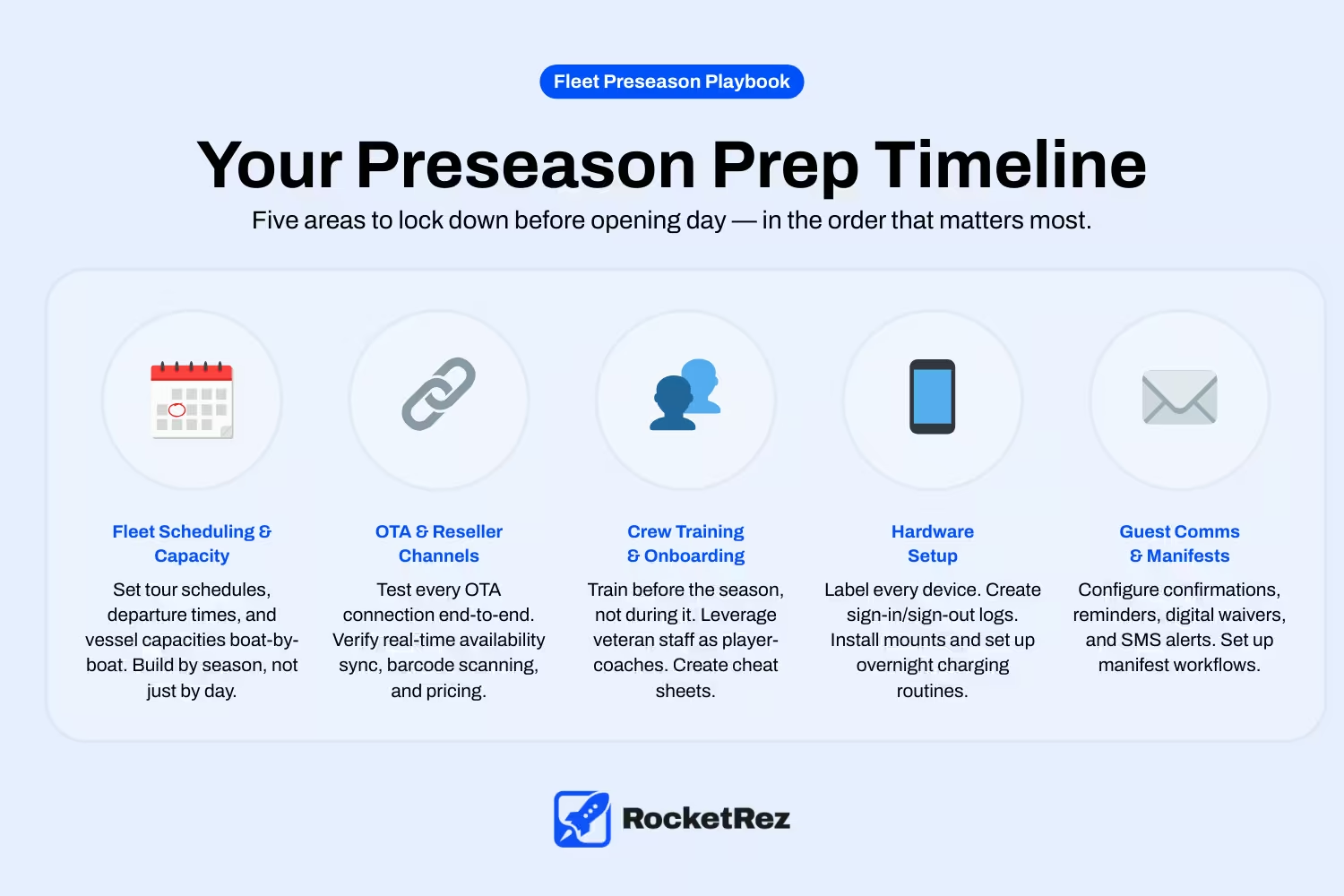
This playbook is a distillation of what we've seen work across dozens of boat tour operations — and what we've seen go wrong.
The foundation of a smooth season is your schedule. Before anything else, go boat-by-boat and set up your custom tour schedules, departure times, and vessel capacities.
This sounds straightforward, but the details matter:
Capacities and departure times should change as demand shifts from spring to peak summer to shoulder season. Set this up in advance rather than scrambling to adjust mid-season.
Weather delays, mechanical issues, and demand surges will happen. Have a clear process for schedule changes — and make sure your booking platform reflects them in real time so guests aren't showing up for a cancelled departure.
If you're running multiple boats simultaneously, stagger departures to spread demand. Overselling one vessel while another runs half-full is a missed opportunity.
Getting this right on the back end reduces the manual workload for your staff all season long and prevents the customer-facing problems that lead to frustration and bad reviews.
If you sell through OTAs like Viator, GetYourGuide, or Expedia — or through resellers like hotel concierges and event planners — your distribution channels need to be tested and live well before bookings start rolling in.
Here's what we recommend:
As Sophia Shafiq, Controller at Red and White Fleet, put it: "RocketRez helps us to make sure that our time slots that are available are also available to our OTAs to make sure they see the same sailing and they're pushing it out to their customers."
That real-time sync is the difference between smooth operations and a dock full of confused guests holding tickets for a sold-out departure.
Seasonal staffing is one of the biggest challenges in this industry. New crew members often arrive with zero prior experience in ticketing, POS operations, or boarding logistics — and you need them ready to serve live customers within days.
The key principle: train before the season, not during it.
Robert Lomangino, Operations Manager at Governors Island, described the difference well: "Before RocketRez, we had handheld ticketing devices with card readers on them. The only option was to purchase tickets just as you were getting on the boat."
When the technology is simple, training gets faster and your team gets confident sooner.
This is one of the most overlooked areas of preseason prep — and it's the source of a surprising number of opening-week problems.
A little organization now saves significant time and frustration all season.
Your tour manifests are more than a headcount — they're the backbone of onboard operations.
A well-managed manifest helps your crew:
When you're running multiple boats simultaneously — sometimes miles apart on the water — having a cloud-connected system means every vessel's data flows to a central location. Your staff on Boat A and your staff on Boat B are working from the same source of truth, even if they're in different harbors.
Before the season starts, configure your guest communication flows. This is the piece that separates a good guest experience from a great one.
At minimum, set up:
We also strongly recommend collecting phone numbers at POS from every guest — including walk-ups. It takes an extra moment at check-in, but it gives you a direct channel for day-of communication and builds a marketing list for future seasons.
With digital boarding passes that support Apple Wallet and Google Wallet, you can deliver a modern, contactless boarding experience that guests appreciate.
Your season is only as good as your preparation. Every item on this checklist — from fleet scheduling to hardware labeling to communication setup — is an investment that pays back in smoother operations, happier guests, and fewer fire drills during your busiest months.
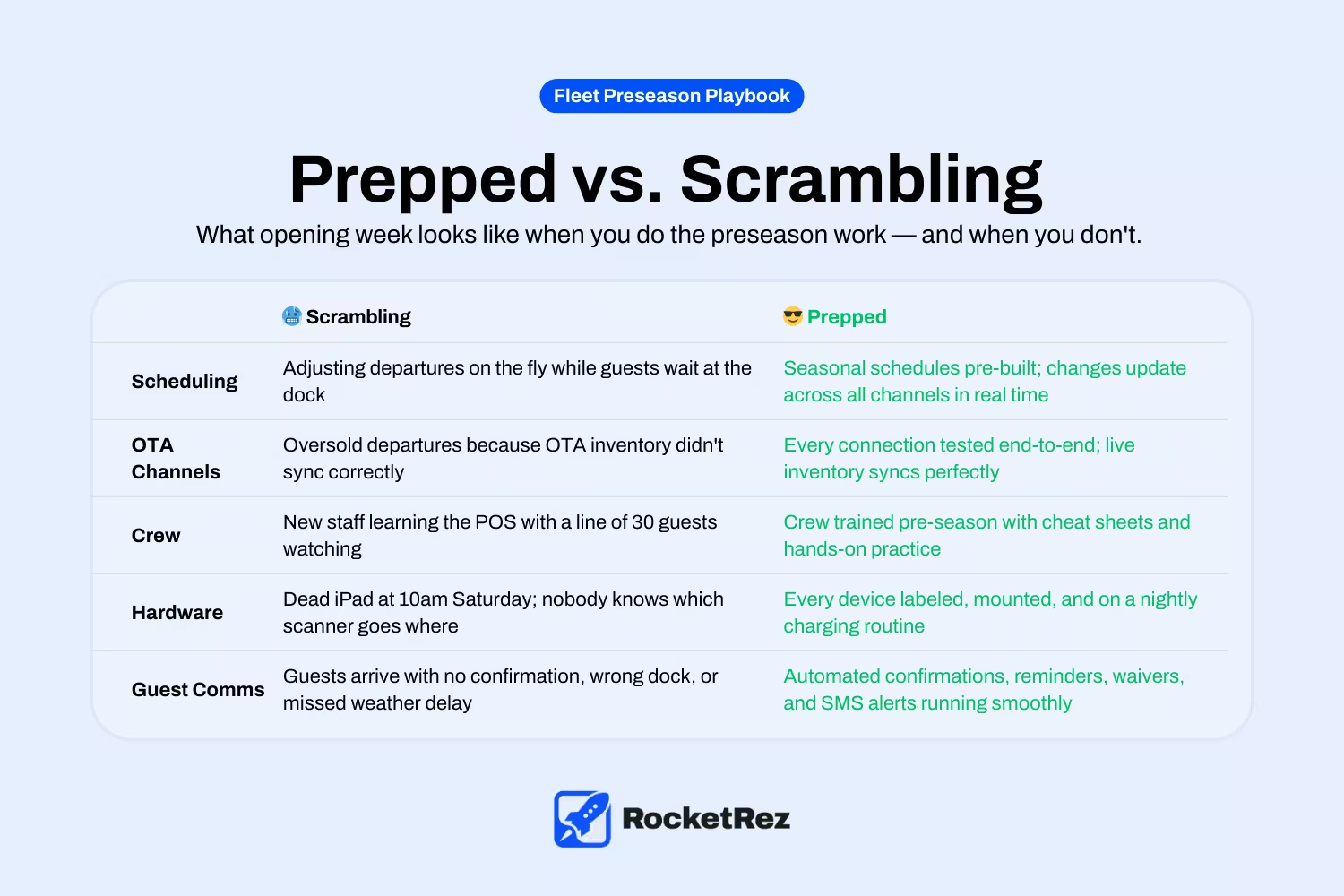
The difference between a chaotic opening week and a seamless one is almost always in the preseason work.
If you'd like help getting your boat tour operation ready for the season, our team would love to chat. We bring an operator-first mindset to every conversation.